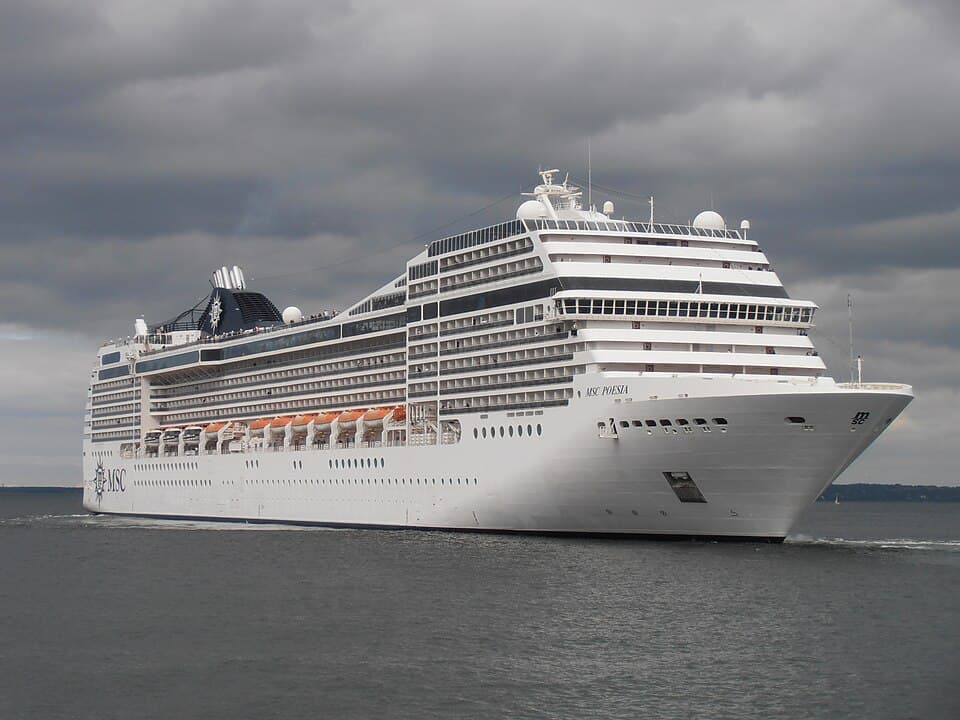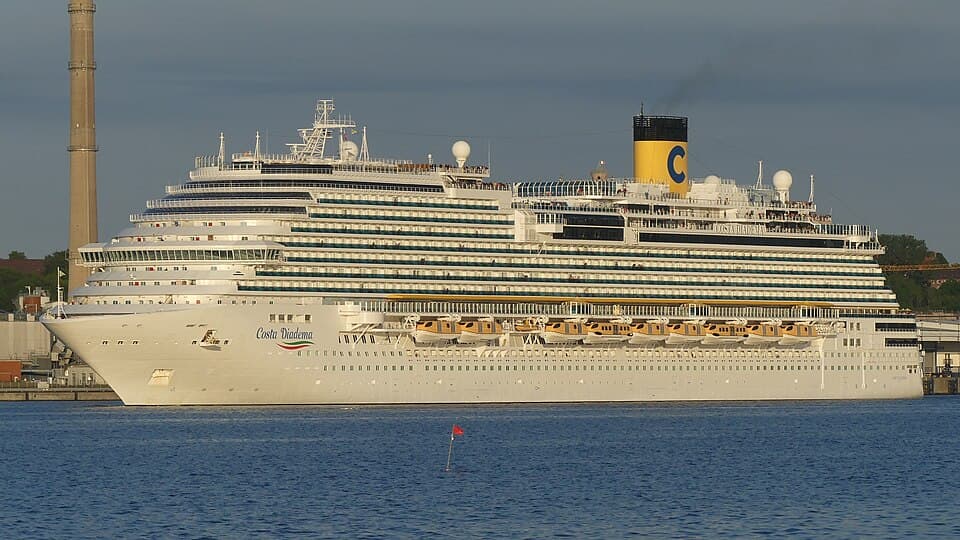
When you see a cruise ship for the first time in person, the sheer scale is breathtaking. But just how big are cruise ships? The answer depends on which one you're looking at, modern cruise ships range from intimate 100-passenger yachts to floating cities carrying more than 7,600 people.

Mifaso Cruise-Approved Power Strip
- Cruise-approved (no surge protector) with multiple USB ports
- Compact design fits perfectly on the narrow cabin nightstand
Cruise cabins have limited outlets, this solves the charging problem without tripping ship safety rules
View on AmazonThis complete guide breaks down cruise ship sizes with real-world comparisons, actual dimensions of the biggest ships, and everything you need to understand the scale of these engineering marvels.
Ready to book a cruise? Browse 12,000+ live cruise deals on Cruisebound. Filter by destination, length, cabin type, and departure port to see today's pricing before you keep reading.
The Quick Answer: How Big Are Cruise Ships?
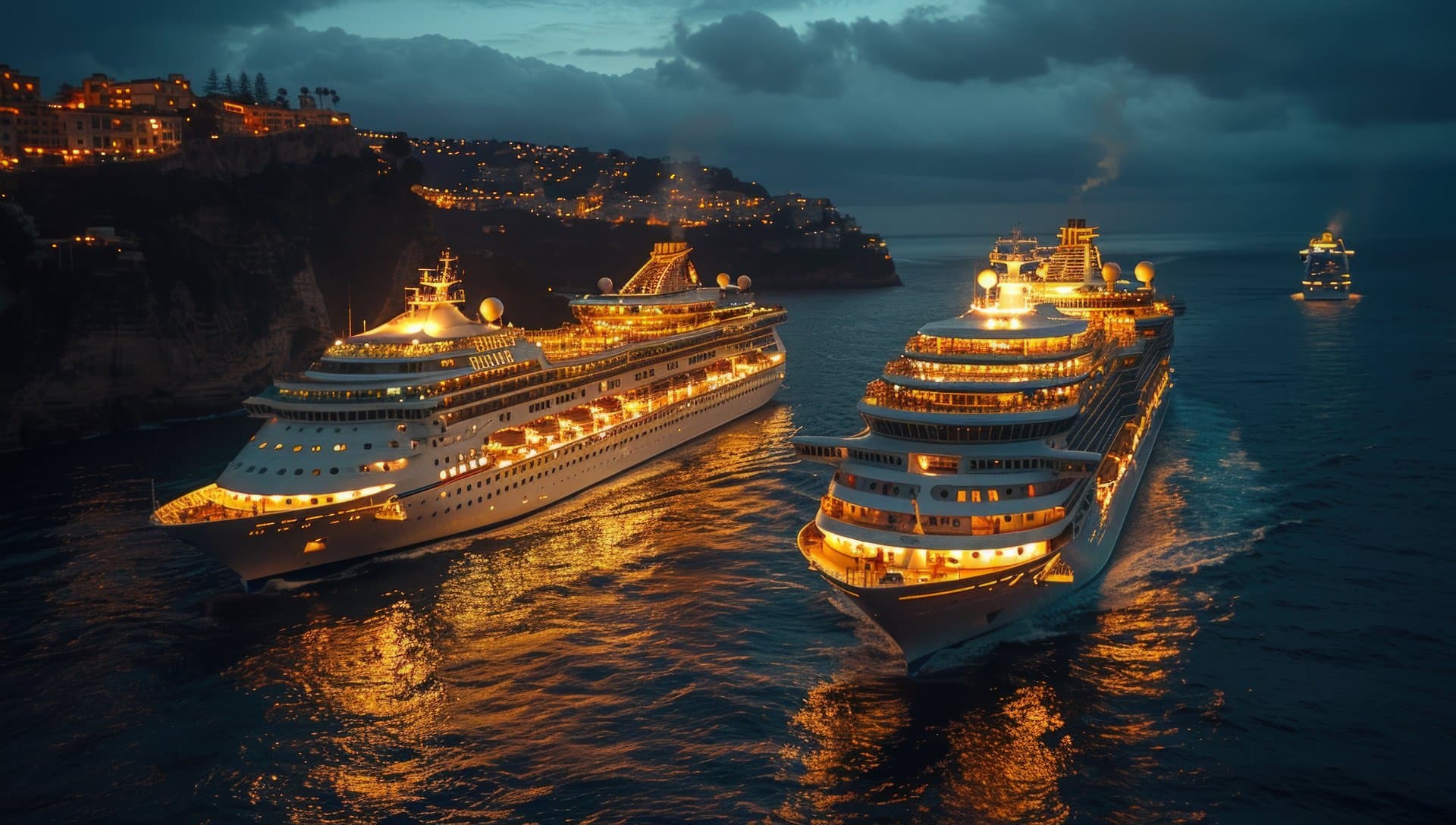
Modern cruise ships range from:
Small expedition ships: 100-400 passengers, 5,000-15,000 GT
Mid-size ships: 1,000-2,500 passengers, 40,000-90,000 GT
Large ships: 2,500-4,000 passengers, 90,000-140,000 GT
Mega ships: 4,000-6,000 passengers, 140,000-180,000 GT
Ultra-mega ships: 6,000+ passengers, 180,000-250,000+ GT
The largest cruise ship in the world, Icon of the Seas, measures 248,663 gross tons, is 1,198 feet long (nearly a quarter mile), and can carry 7,600 passengers at maximum capacity.
To put that in perspective: Icon of the Seas is five times longer than a Boeing 747, carries more people than a small town, and stands taller than the Statue of Liberty when measured from keel to funnel.
Understanding Cruise Ship Size Measurements
Before diving into comparisons, you need to understand how cruise ships are measured.

Cruise Door Organizer 24 Pockets Magnetic
- 24 clear pockets attach magnetically to the metal cabin door
- Holds sunscreen, lanyards, snacks, and small items
The single most recommended cruise hack, turns your cabin door into instant storage
View on AmazonGross Tonnage (GT): The Standard Size Metric

5-Pack Cruise Lanyards Waterproof
- Waterproof holders protect your cruise card at the pool and on excursions
- Five lanyards for the whole family
Your cruise card is your key, wallet, and ID, a waterproof lanyard keeps it safe and accessible
View on AmazonGross Tonnage is the official measurement for cruise ship size, but it doesn't measure weight. Instead, GT measures total internal enclosed volume.
Key facts:
Formula: 1 GT = 100 cubic feet of enclosed space (roughly 2.83 cubic meters)
Includes all interior spaces: cabins, restaurants, theaters, shops, pools, hallways
Does NOT include external decks, open-air spaces, or the ship's actual weight
Regulated by the International Maritime Organization (IMO)
Example: Icon of the Seas at 248,663 GT has 25,080,000 cubic feet of enclosed interior space, equivalent to about 575 Olympic swimming pools worth of volume.
Displacement Tonnage: Actual Weight
Displacement tonnage measures the actual weight of the ship, specifically, how much water it displaces when floating.
Key differences from GT:
Measures weight in metric tons (tonnes), not volume
Icon of the Seas weighs approximately 145,000 tonnes fully loaded
Less commonly used in marketing, but important for engineering
Comparison: A fully loaded Icon of the Seas weighs about the same as 1,000 adult blue whales or 97,000 average cars.
Length Overall (LOA)
Length Overall measures the ship from the very front (bow) to the very back (stern).
Today's largest ships:
Icon of the Seas: 365 meters (1,198 feet)
Wonder of the Seas: 362 meters (1,188 feet)
MSC World Europa: 333 meters (1,092 feet)
Comparison: Icon of the Seas is longer than the height of the Eiffel Tower (324 meters) if the tower were laid on its side.
Beam (Width)
Beam measures the ship's width at its widest point.
Modern mega ships typically measure:
40-51 meters wide (131-167 feet)
Icon of the Seas: 51 meters (167 feet)
Wonder of the Seas: 47.4 meters (156 feet)
Comparison: Icon's beam is wider than half a football field (53 yards).
Height from Waterline and Draft
Height from waterline: How many decks rise above the water
Modern mega ships: 18-20 passenger decks
Total height above waterline: 50-60 meters (164-197 feet)
Draft: How deep the ship sits in the water
Mega ships: 8-10 meters (26-33 feet)
Critical for port access, shallow-draft ships can visit more destinations
Comparison: From keel to funnel top, Icon of the Seas stands approximately 65 meters tall, taller than the Statue of Liberty including its pedestal (93 meters base to torch, but ship is taller than statue alone at 46 meters).
Real-World Size Comparisons
Let's compare cruise ships to familiar objects and structures.
Cruise Ships vs. Aircraft Carriers
Icon of the Seas (world's largest cruise ship):
Length: 365 meters (1,198 feet)
Weight: 145,000 tonnes (displacement)
Passenger capacity: 7,600
USS Gerald R. Ford (world's largest aircraft carrier):
Length: 333 meters (1,092 feet)
Weight: 100,000 tonnes (displacement)
Crew: 4,500
Winner: Icon of the Seas is 32 meters longer and 45% heavier than the world's largest warship. Modern mega cruise ships are literally bigger than aircraft carriers.
Cruise Ships vs. Skyscrapers
If you stood Icon of the Seas vertically:
Icon of the Seas: 365 meters long
Taller than: Eiffel Tower (324m), Chrysler Building (319m)
Shorter than: Empire State Building (381m), Willis Tower (442m)
About the same as: The Shard in London (310m to roof)
Comparison: Icon's 1,198-foot length would reach from street level to the 87th floor of the Empire State Building if stood on end.
Cruise Ships vs. Sports Venues
Icon of the Seas length (1,198 feet) equals:
3.6 football fields (360 feet each)
Nearly 4 soccer fields (330 feet each)
12 basketball courts (94 feet each) placed end-to-end
Icon of the Seas volume (248,663 GT = 25 million cubic feet) equals:
575 Olympic swimming pools
10,700 average houses (2,300 sq ft each)
The volume of 8 Good Year Blimps
Cruise Ships vs. Famous Ships from History
RMS Titanic (1912):
Length: 269 meters (882 feet)
Weight: 52,310 tonnes
Passengers: 2,435 maximum
Icon of the Seas (2024):
Length: 365 meters (1,198 feet)
Weight: 145,000 tonnes
Passengers: 7,600 maximum
Comparison: Icon of the Seas is 35% longer, 2.8 times heavier, and carries 3.1 times more passengers than Titanic, the ship once called "unsinkable" and thought to be impossibly large.
Queen Mary 2 (2004, still sailing):
Length: 345 meters (1,132 feet)
Weight: 76,000 tonnes
Passengers: 2,691
Despite being a modern ocean liner designed for transatlantic crossings, QM2 is still 20 meters shorter and carries far fewer passengers than today's largest cruise ships.
Cruise Ships vs. Airplanes
Boeing 747-8 (longest passenger plane):
Length: 76.3 meters (250 feet)
Weight: 448 tonnes (maximum takeoff weight)
Passengers: 467 maximum
Icon of the Seas:
Length: 365 meters (1,198 feet)
Weight: 145,000 tonnes
Passengers: 7,600 maximum
Comparison: Icon of the Seas is 4.8 times longer than a 747 and weighs 324 times more. You could line up 5 Boeing 747s end-to-end and they still wouldn't match Icon's length.
The Biggest Cruise Ships in the World (2026)
Here are the actual dimensions of the largest cruise ships currently sailing, with real-world size comparisons.
1. Icon of the Seas (Royal Caribbean, 2024)
Specifications:
Gross Tonnage: 248,663 GT
Length: 365 meters (1,198 feet)
Beam: 51 meters (167 feet)
Height: 65 meters keel to funnel (213 feet)
Passenger Decks: 20
Passengers: 5,610 (double occupancy), 7,600 (maximum)
Crew: 2,350
Space Ratio: 44.7 (very spacious)
Size Comparison:
3.6 football fields long
Taller than 20-story building
Wider than 16 highway lanes
Heavier than 1,000 blue whales
Notable Features: Category 6 waterpark (largest at sea), six distinct neighborhoods, Thrill Island, Surfside family zone, 40+ restaurants and bars.

Aerotrunk Compression Packing Cubes 4-Pack
- Double-zipper compression cuts volume by up to 60%
- Four sizes cover every clothing type
Compression cubes are the single best way to fit a week of cruise outfits into a carry-on
View on Amazon2. Utopia of the Seas (Royal Caribbean, 2024)

DIYMAG Magnetic Hooks 6-Pack
- Super-strong neodymium magnets stick to cabin walls and ceilings
- Hang hats, bags, towels, and lanyards anywhere
Cruise cabin walls are steel, magnetic hooks turn every surface into storage
View on AmazonSpecifications:
Gross Tonnage: 236,860 GT
Length: 362 meters (1,188 feet)
Beam: 47.4 meters (156 feet)
Passengers: 5,668 (double occupancy), 7,084 (maximum)
Crew: 2,300
Space Ratio: 41.8
Size Comparison:
Nearly as long as 4 football fields
Only 3 meters shorter than Wonder of the Seas
Could fit 7 blue whales on its deck lengthwise
Notable: Newest Oasis-class ship, short-cruise focused, Central Park with real trees.
Track Utopia of the Seas live →
3. Wonder of the Seas (Royal Caribbean, 2022)
Specifications:
Gross Tonnage: 236,857 GT
Length: 362 meters (1,188 feet)
Beam: 47.4 meters (156 feet)
Passengers: 5,734 (double occupancy), 7,084 (maximum)
Crew: 2,300
Space Ratio: 41.3
Size Comparison:
Length of 8 Boeing 737s parked nose-to-tail
As wide as 5 city buses side-by-side
8 neighborhood zones spanning 18 decks
Notable: Suite Neighborhood, Ultimate Abyss 10-story slide, multiple pool zones.
Track Wonder of the Seas live →
4. Symphony of the Seas (Royal Caribbean, 2018)
Specifications:
Gross Tonnage: 228,081 GT
Length: 361 meters (1,184 feet)
Beam: 47.4 meters (156 feet)
Passengers: 5,518 (double occupancy), 6,680 (maximum)
Crew: 2,200
Space Ratio: 41.3
Size Comparison:
91 meters taller than Niagara Falls (51m) if stood vertically
Could hold 50,000 average-size cars by volume
Cruises with enough people to populate a small town
Compare Royal Caribbean's largest ships →
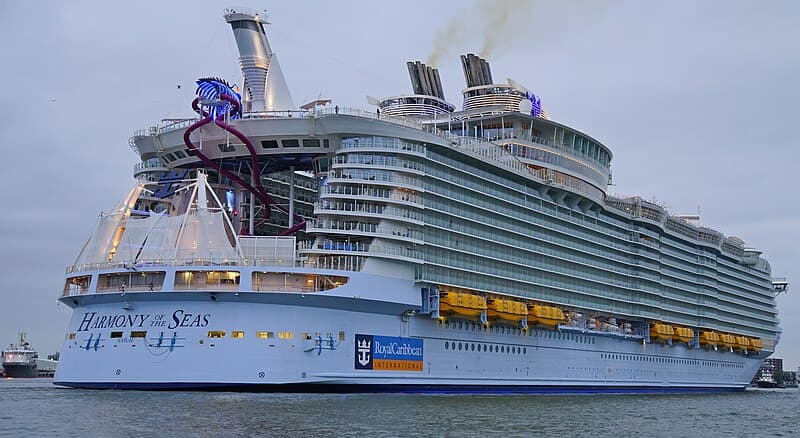
5. Harmony of the Seas (Royal Caribbean, 2016)
Specifications:
Gross Tonnage: 226,963 GT
Length: 362 meters (1,188 feet)
Passengers: 5,479 (double occupancy), 6,687 (maximum)
Virtually identical to Symphony in size, slightly smaller GT due to different configuration.
6. Allure of the Seas (Royal Caribbean, 2010)
Specifications:
Gross Tonnage: 225,282 GT
Length: 361 meters (1,187 feet)
Passengers: 5,492 (double occupancy), 6,780 (maximum)
The first ship to exceed 225,000 GT when launched, held the title of world's largest until 2016.
7. Oasis of the Seas (Royal Caribbean, 2009)
Specifications:
Gross Tonnage: 225,282 GT
Length: 361 meters (1,184 feet)
Passengers: 5,402 (double occupancy), 6,771 (maximum)
Historic Importance: The ship that revolutionized cruise ship design with the neighborhood concept. When launched in 2009, it was 40% larger than any previous cruise ship.
Size Comparison: Oasis introduced Central Park, a real outdoor park with 12,000 live plants and trees in the middle of the ocean. The park spans two decks and runs 100 meters down the center of the ship.
8. MSC World Europa (MSC Cruises, 2022)
Specifications:
Gross Tonnage: 215,863 GT
Length: 333 meters (1,092 feet)
Beam: 47 meters (154 feet)
Passengers: 4,888 (double occupancy), 6,762 (maximum)
Crew: 2,138
Space Ratio: 44.2
Size Comparison:
Same length as USS Gerald R. Ford aircraft carrier
23 decks (one of the tallest ships afloat)
Longer than 10 basketball courts end-to-end
Notable: First LNG-powered mega ship, futuristic design, Europa Promenade with LED sky.
9. MSC World America (MSC Cruises, 2025)
Specifications:
Gross Tonnage: 215,863 GT (same as World Europa)
Length: 333 meters (1,092 feet)
Passengers: 4,888 (double occupancy), 6,762 (maximum)
Second World-class ship, North America focused.
10. MSC Meraviglia (MSC Cruises, 2017)
Specifications:
Gross Tonnage: 171,598 GT
Length: 315 meters (1,033 feet)
Passengers: 4,500 (double occupancy), 6,334 (maximum)
Notable: 96-meter LED-lit promenade, Cirque du Soleil shows at sea.
Cruise Ship Size Categories Explained
Understanding size categories helps you choose the right ship for your preferences.
Small Ships (100-1,000 passengers)
Typical Specs:
GT: 5,000-40,000
Length: 100-240 meters (328-787 feet)
Passengers: 100-1,000
Crew Ratio: Often 1:1 or 1:2 (luxury)
Real-World Size:
About as long as 1-2 city blocks
Similar to a small office building in volume
Can fit in smaller harbors that mega ships cannot access
Examples:
Windstar Wind Surf: 187m, 342 passengers
Regent Seven Seas Splendor: 224m, 750 passengers
Azamara Journey: 181m, 690 passengers
Best For: Port-intensive itineraries, personalized service, intimate atmosphere, accessing small Mediterranean or Norwegian ports.
Mid-Size Ships (1,000-2,500 passengers)
Typical Specs:
GT: 40,000-90,000
Length: 240-290 meters (787-951 feet)
Passengers: 1,000-2,500
Crew Ratio: 1:2 to 1:3
Real-World Size:
About 2.5 football fields long
Equivalent to a medium office tower laid horizontally
Similar length to 3-4 subway trains
Examples:
Princess Coral Princess: 294m, 2,000 passengers
Holland America Nieuw Statendam: 299m, 2,666 passengers
Celebrity Millennium: 294m, 2,158 passengers
Best For: Traditional cruise experience, first-time cruisers, mature travelers seeking refined atmosphere without overwhelming size.
Large Ships (2,500-4,000 passengers)
Typical Specs:
GT: 90,000-140,000
Length: 290-330 meters (951-1,083 feet)
Passengers: 2,500-4,000
Crew Ratio: 1:2.5 to 1:3
Real-World Size:
3+ football fields long
Height of 15-story building above waterline
Volume equivalent to 8-10 cruise ships from the 1990s
Examples:
Norwegian Breakaway: 324m, 3,969 passengers
Carnival Vista: 323m, 3,934 passengers
Celebrity Edge: 306m, 2,918 passengers
Best For: Families, variety seekers, balance of amenities and manageable size.
Mega Ships (4,000-6,000 passengers)
Typical Specs:
GT: 140,000-180,000
Length: 330-360 meters (1,083-1,181 feet)
Passengers: 4,000-6,000
Crew Ratio: 1:2.5 to 1:3.5
Real-World Size:
3.5 football fields long
Taller than 18-story building
Equivalent to large shopping mall in volume
Examples:
Carnival Jubilee: 344m, 5,200 passengers (183,900 GT)
Norwegian Encore: 333m, 3,998 passengers (169,116 GT)
MSC Seascape: 339m, 4,540 passengers (170,412 GT)
Best For: Resort-style cruises, thrill-seekers, families with kids and teens, multiple pool areas, Broadway shows.
Ultra-Mega Ships (6,000+ passengers)
Typical Specs:
GT: 180,000-248,663
Length: 360-365 meters (1,181-1,198 feet)
Passengers: 5,500-7,600
Crew Ratio: 1:2.5 to 1:3.2
Real-World Size:
Nearly 4 football fields long
20+ passenger decks
Volume equivalent to 575 Olympic pools (Icon)
Taller than 20-story building from keel to funnel
Examples:
Icon of the Seas: 365m, 7,600 max (248,663 GT)
Utopia of the Seas: 362m, 7,084 max (236,860 GT)
Wonder of the Seas: 362m, 7,084 max (236,857 GT)
Best For: Multi-generational families, first-of-their-kind attractions, waterparks, multiple neighborhood zones, never running out of things to do.
Explore all cruise ship sizes →
How Tonnage Is Measured: GT vs. Displacement
Many people confuse gross tonnage (GT) with actual weight. Here's the technical breakdown.
Gross Tonnage (GT): Volume Measurement
What it measures: Total enclosed interior volume
Formula:
GT = K × VWhere:
V = total volume of all enclosed spaces in cubic meters
K = 0.2 + 0.02 × log₁₀(V) (a coefficient that varies by ship size)
Simplified: Roughly 100 cubic feet = 1 GT, or 2.83 cubic meters = 1 GT
Example Calculation for Icon of the Seas:
248,663 GT = approximately 25,080,000 cubic feet of enclosed volume
This includes every cabin, hallway, restaurant, theater, shop, pool area, and enclosed deck
Why GT Matters:
Used for port fees and regulations
Determines maritime laws that apply
Standard for comparing ship sizes
Indicates total interior space available
Displacement Tonnage: Weight Measurement
What it measures: Actual weight of the ship fully loaded
How it works: Based on Archimedes' Principle, a floating ship displaces water equal to its weight
Formula:
Displacement = Volume of water displaced × Density of seawaterExample for Icon of the Seas:
Displacement: approximately 145,000 metric tonnes fully loaded
This includes the ship's steel structure, engines, fuel, fresh water, provisions, passengers, luggage, and crew
Why Displacement Matters:
Engineering and stability calculations
Determines how deep the ship sits (draft)
Important for naval architects
Rarely used in marketing
Space Ratio: Passenger Experience Metric
Formula:
Space Ratio = Gross Tonnage ÷ Passengers (double occupancy)What it indicates: How much interior volume each passenger has
Guidelines:
50+: Ultra-spacious (small luxury ships)
40-50: Very spacious (Icon of the Seas: 44.7)
35-40: Spacious (modern premium ships)
30-35: Average (most mega ships)
25-30: Compact (budget or older ships)
Below 25: Can feel crowded
Example Comparison:
Ship | GT | Passengers | Space Ratio |
|---|---|---|---|
Icon of the Seas | 248,663 | 5,610 | 44.7 |
MSC World Europa | 215,863 | 4,888 | 44.2 |
Wonder of the Seas | 236,857 | 5,734 | 41.3 |
Carnival Jubilee | 183,900 | 5,200 | 35.4 |
Notice that Icon of the Seas, despite being the largest ship, has the highest space ratio, meaning more elbow room per passenger than even smaller mega ships.
Compare any two cruise ships side by side →
Visual Size Comparisons Chart
Here's how the world's largest cruise ships compare to famous landmarks and objects.
Length Comparisons (Icon of the Seas: 365 meters / 1,198 feet)
Icon of the Seas could span:
From home plate over the outfield fence at a baseball stadium with room to spare
Across 4 city blocks in Manhattan (average block is 80 meters)
The length of 48 school buses (25 feet each) parked end-to-end
15 bowling lanes (60 feet each) placed end-to-end
Taller than when stood vertically:
Eiffel Tower: 324m (Icon: 365m)
Statue of Liberty (with pedestal): 93m
Big Ben: 96m
Leaning Tower of Pisa: 57m
Shorter than:
Empire State Building: 381m (443m with antenna)
Willis Tower: 442m
Burj Khalifa: 828m (but Icon is still 44% of its height!)
Width Comparisons (Icon of the Seas: 51 meters / 167 feet)
Icon's beam (width) equals:
Half an American football field (53.3 yards = 160 feet)
17 average cars (9.8 feet wide) parked side-by-side
25 king-size beds (6.6 feet wide) arranged side-by-side
6 highway lanes (12 feet each) plus shoulders
Weight Comparisons (Icon of the Seas: ~145,000 tonnes displacement)
Icon's weight equals:
1,000 adult blue whales (145 tonnes each)
97,000 average cars (1.5 tonnes each)
21,000 African elephants (7 tonnes each)
145 million kilograms of mass
For perspective: Icon of the Seas weighs about 2.8 times more than RMS Titanic (52,310 tonnes).
Passenger Capacity Comparisons (Icon: 7,600 max capacity)
Icon of the Seas at full capacity carries:
More people than live in many small towns (e.g., Jackson Hole, Wyoming: ~10,000)
Equal to 16 fully loaded Boeing 747s (467 passengers each)
About twice the capacity of Royal Albert Hall (5,272 seats)
More than a typical Big Ten football stadium student section
Luxury vs. Contemporary: Size Isn't Everything
While mega ships dominate headlines, smaller luxury ships offer completely different experiences, and different size philosophies.
Luxury Small Ships: High Space Ratio, Low Passenger Count
Regent Seven Seas Splendor (2020):
GT: 55,254
Passengers: 750 (double occupancy)
Space Ratio: 73.7 (one of the highest afloat)
Length: 224 meters (735 feet)
Despite being 141 meters shorter than Icon of the Seas and carrying one-tenth the passengers, Splendor offers:
All-suite accommodations (largest average cabin size)
Included shore excursions and beverages
1:1.3 crew-to-passenger ratio
Butler service in every suite
Size Philosophy: Maximize interior volume per passenger rather than total capacity.
Contemporary Mega Ships: Maximum Activity Variety
Icon of the Seas (2024):
GT: 248,663
Passengers: 5,610 (double occupancy)
Space Ratio: 44.7 (excellent for its size)
Length: 365 meters
Icon of the Seas offers:
40+ restaurants and bars
Category 6 waterpark (largest at sea)
Six neighborhood zones
Multiple pools, slides, and thrill attractions
Broadway-caliber entertainment
Size Philosophy: Create a self-sufficient resort with every possible amenity, requiring massive scale.
Which Size Philosophy Is Better?
It depends on what you value:
Choose luxury small ships if you prioritize:
Destination immersion over onboard activities
Personalized service and privacy
All-inclusive pricing
Access to small ports
Refined, adult-oriented atmosphere
Spacious accommodations
Choose mega ships if you prioritize:
Maximum activity variety
Family-friendly amenities
Waterparks and thrill attractions
Multiple dining options
Budget-friendly pricing
Never running out of things to do
The middle ground: Premium mid-size ships like Celebrity Edge (130,818 GT, 2,918 passengers) offer modern luxury, excellent space ratios (44.9), and innovative design without overwhelming size.
Compare cruise line categories →
How Ship Size Affects Your Cruise Experience
Size impacts far more than just bragging rights. Here's how different ship sizes affect real cruising experiences.
Port Access and Itineraries
Small ships (under 50,000 GT):
Can access Santorini's old port via tender
Visit Kotor, Montenegro (narrow bay)
Dock at Portofino and Positano (tiny Italian harbors)
Navigate Norwegian fjords and Alaskan inland passages
Mega and ultra-mega ships (180,000+ GT):
Limited to major cruise ports with large terminals
Often use private islands in Caribbean
Cannot access Venice historic center (banned for environmental reasons)
Require deep-water ports and extensive infrastructure
Trade-off: Mega ships can't visit intimate ports, but their private island destinations (Perfect Day at CocoCay, Labadee) offer exclusive beach experiences unavailable to smaller ships.
Embarkation and Disembarkation Times
Small ships (under 1,000 passengers):
Embarkation: 30-60 minutes
Disembarkation: 30-90 minutes
Fewer security lines, simpler check-in
Mega ships (4,000-6,000+ passengers):
Embarkation: 1-3 hours depending on arrival time
Disembarkation: 2-4 hours (multiple waves)
Requires more planning and patience
Pro tip: On mega ships, book early port arrival time for embarkation and use express disembarkation (self-carry luggage) to minimize wait times.
Dining and Entertainment Variety
Small ships:
1-3 main dining rooms
3-6 specialty restaurants
One main theater with smaller-scale shows
Limited bars and lounges
Mega ships:
4-6 main dining venues
15-25 specialty restaurants and cafes
Multiple theaters with Broadway productions, ice shows, aqua shows
20-40 bars and lounges with different themes
Example: Icon of the Seas has 40+ dining and drinking venues, you could eat at a different restaurant every meal for 13 days and never repeat.
Crowd Management
Common misconception: "Bigger ships = more crowded"
Reality: Space ratio and design matter more than raw size.
Icon of the Seas (44.7 space ratio, 7,600 max passengers) often feels less crowded than older ships like Carnival Ecstasy (31.3 space ratio, 2,606 passengers) because:
Neighborhood design spreads passengers across six distinct zones
Multiple pool areas (7 pools on Icon vs. 2-3 on older ships)
Reservation systems for dining and shows prevent bottlenecks
More square footage per passenger despite higher total capacity
Most crowded times on any ship:
Embarkation day lunch (1-3pm)
Main dining room during first seating
Lido buffet on sea days (11am-1pm)
Disembarkation morning in buffet
Seasickness and Stability
Myth: "Bigger ships are always more stable."
Reality: Size helps, but design matters more.
Factors affecting stability:
Size: Larger ships are less affected by waves (more inertia)
Stabilizers: Fin-like devices that reduce rolling (all modern ships have these)
Hull design: Modern ships use advanced hydrodynamics
Ballast: Water tanks that shift weight for balance
Most stable ships:
Ultra-mega ships (180,000+ GT): Icon, Wonder of the Seas (massive inertia)
Mid-size with modern stabilizers (80,000-100,000 GT): Good balance of size and maneuverability
Least stable:
Small expedition ships (under 10,000 GT): More affected by swells
Older mid-size ships: Less advanced stabilization technology
Best advice: If prone to seasickness, choose itineraries in calm waters (Caribbean, Mediterranean summer) rather than focusing solely on ship size.
Frequently Asked Questions About Cruise Ship Size
What is the biggest cruise ship in the world?
Icon of the Seas (Royal Caribbean) is the world's largest cruise ship at 248,663 GT, measuring 365 meters (1,198 feet) long and carrying up to 7,600 passengers.
Track Icon of the Seas in real-time →
How does Icon of the Seas compare to Titanic?
Icon of the Seas is:
35% longer (365m vs 269m)
2.8 times heavier (145,000 tonnes vs 52,310 tonnes)
3.1 times more passengers (7,600 vs 2,435)
Five times the gross tonnage (248,663 GT vs 46,328 GT)
Are cruise ships bigger than aircraft carriers?
Yes. The largest cruise ships are now bigger than the largest aircraft carriers.
Icon of the Seas:
Length: 365 meters
Displacement: 145,000 tonnes
USS Gerald R. Ford (largest aircraft carrier):
Length: 333 meters
Displacement: 100,000 tonnes
Icon is 32 meters longer and 45% heavier.
What's the best size cruise ship for first-timers?
Mid-size to large ships (1,500-4,000 passengers) are ideal for first cruises:
Enough amenities to explore without feeling overwhelmed
Easier to navigate than mega ships
More intimate than ultra-mega vessels
Good value pricing
Recommended first-timer ships:
Celebrity Edge (2,918 passengers, modern design)
Norwegian Escape (3,963 passengers, great activities)
Princess Grand Princess (2,600 passengers, traditional cruising)
Do bigger ships have more motion/sway?
Generally, bigger ships are more stable due to greater mass and inertia. However:
Modern stabilizers matter more than raw size
Hull design affects motion significantly
Route and weather matter most (Caribbean is calmer than North Atlantic)
Most stable: Ultra-mega ships (180,000+ GT) in calm waters Least stable: Small expedition ships (under 10,000 GT) in rough seas
What's the smallest cruise ship?
Seadream I and Seadream II are among the smallest luxury cruise ships at just 4,253 GT and 112 passengers, about the size of a large private yacht.
Other small ships:
Windstar sailing ships: 5,300 GT, 148-312 passengers
Paul Gauguin Cruises: 19,200 GT, 332 passengers
These ships access ports like Portofino, Kotor, and small Greek islands that mega ships can never visit.
How many people fit on the largest cruise ship?
Icon of the Seas carries:
5,610 passengers at double occupancy (standard capacity)
7,600 passengers at maximum capacity (every berth filled)
2,350 crew members
Total: Nearly 10,000 people on board at full capacity.
How do cruise lines measure ship size?
Gross Tonnage (GT) is the international standard, measuring total interior volume (not weight).
Formula: 100 cubic feet of enclosed space = 1 GT
Other measurements:
Length Overall (LOA): Bow to stern length
Beam: Width at widest point
Draft: Depth below waterline
Displacement: Actual weight in tonnes
Why do cruise ships keep getting bigger?
Economics and demand drive size increases:
Economies of scale: Larger ships have lower per-passenger operating costs
More amenities: Modern travelers expect waterparks, multiple restaurants, entertainment
Competition: Lines compete on features, requiring larger platforms
Private destinations: Mega ships create demand for exclusive private islands
Technology: Modern engineering makes 200,000+ GT ships feasible and safe
Environmental factor: Larger ships are actually more fuel-efficient per passenger than smaller vessels, Icon of the Seas uses LNG (liquefied natural gas), producing 25% less CO₂ than traditional marine fuel.
Can cruise ships be too big?
Potential drawbacks of ultra-mega ships:
Port limitations: Cannot access many interesting destinations Embarkation delays: Boarding 7,000 passengers takes hours Crowding: Even with good space ratios, certain areas can feel packed Impersonal: Harder to build relationships with crew or other passengers Overwhelming: Some travelers find the size intimidating
Counter-argument: Modern design solves many issues through neighborhood concepts, multiple pools, reservation systems, and smart layout.
Bottom line: Ship size is personal preference, what one traveler finds exciting, another finds overwhelming.
Future of Cruise Ship Sizes
Will ships continue getting bigger?
Yes, but with smarter design rather than just adding mass.
Royal Caribbean's Icon-class ships (Icon of the Seas, Star of the Seas launched 2025) represent a new generation:
High space ratios (44.7) despite massive size
Neighborhood concepts to reduce crowding perception
Advanced propulsion (LNG) for environmental efficiency
Better passenger flow through thoughtful layout
MSC's World-class ships (World Europa, World America) similarly push size boundaries while improving efficiency.
Theoretical maximum cruise ship size
Naval architects estimate practical limits:
Engineering constraints:
Port infrastructure: Few ports can handle ships much larger than Icon
Canal limitations: Panama Canal max: 366m long, 49m wide (Icon barely fits)
Drydock availability: Limited facilities can service 250,000+ GT ships
Emergency evacuation: Must evacuate all passengers within 30 minutes
Economic constraints:
Demand: Not enough travelers want 10,000+ passenger ships
Seasonal fluctuations: Hard to fill massive ships year-round
Port availability: Limited destinations can accommodate ultra-mega vessels
Prediction: Ships will likely max out around 300,000 GT, about 20% larger than Icon of the Seas, unless new technologies (floating hotels, modular design) change the paradigm.
Innovations in ship design
Next-generation features regardless of size:
LNG propulsion: Cleaner-burning fuel (Icon, MSC World-class)
Shore power: Plug into ports to shut down engines
AI-optimized routing: Reduce fuel consumption
Solar panels: Supplemental power for onboard systems
Advanced waste management: Better recycling and waste reduction
Design trends:
Asymmetrical designs: Ships no longer symmetrical (Celebrity Edge)
More outdoor space: Rooftop decks, infinity pools
Smart cabins: Voice-controlled lighting, climate, entertainment
Modular restaurants: Venues that transform throughout the day
See newest cruise ships launching in 2026 →
Conclusion: Size Matters, But It's Not Everything
So, how big are cruise ships? The answer spans from intimate 100-passenger yachts to floating cities carrying 7,600 people, with the largest ships now exceeding aircraft carriers in size.
Key takeaways:
Icon of the Seas is the world's largest at 248,663 GT and 365 meters long, longer than the Eiffel Tower is tall
Gross Tonnage (GT) measures interior volume, not weight
Space ratio matters more than raw size for onboard comfort
Bigger ships offer more amenities but can't access small ports
Mid-size ships (1,500-4,000 passengers) offer the best balance for most travelers
The right size for you depends on priorities:
Destination focus? Choose smaller ships
Family vacation? Choose mega ships with waterparks
Luxury service? Choose boutique/small ships
Activity variety? Choose large to mega ships
Budget-conscious? Choose larger contemporary ships
Ready to explore cruise ships by size? Use our tools:
Compare any two cruise ships side-by-side →
Browse the largest cruise ships in the world →
Explore all cruise lines by category →
Track any cruise ship live on our map →
Read our cruise ship size comparison guide →
Still have questions about cruise ship sizes? Understanding dimensions, tonnage, and space ratios helps you choose the perfect vessel for your cruise vacation. Whether you prefer the intimacy of a 200-passenger yacht or the excitement of a 7,000-passenger floating resort, there's a cruise ship size perfect for your travel style.