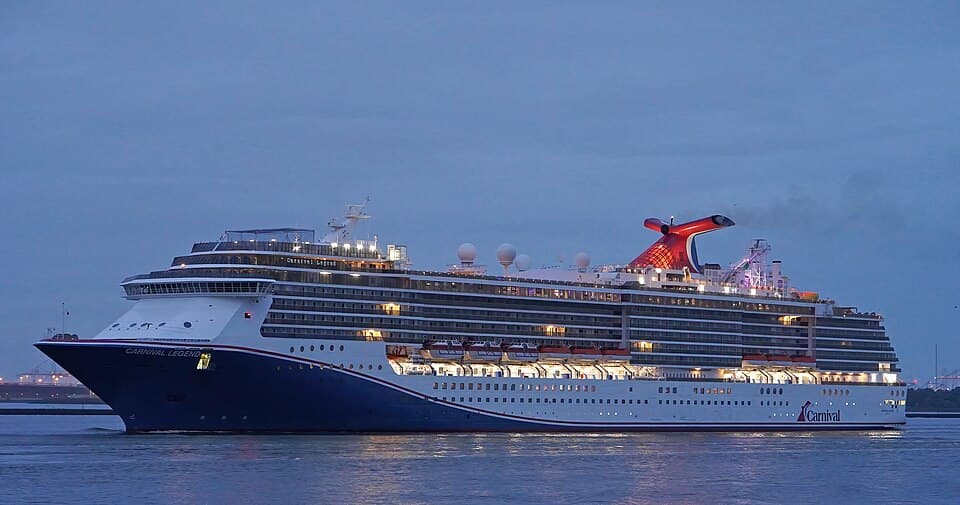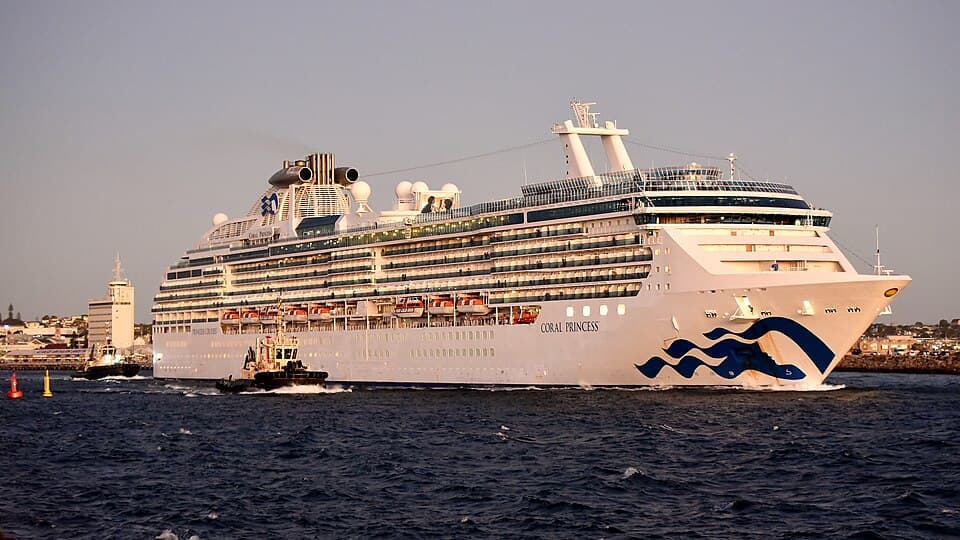
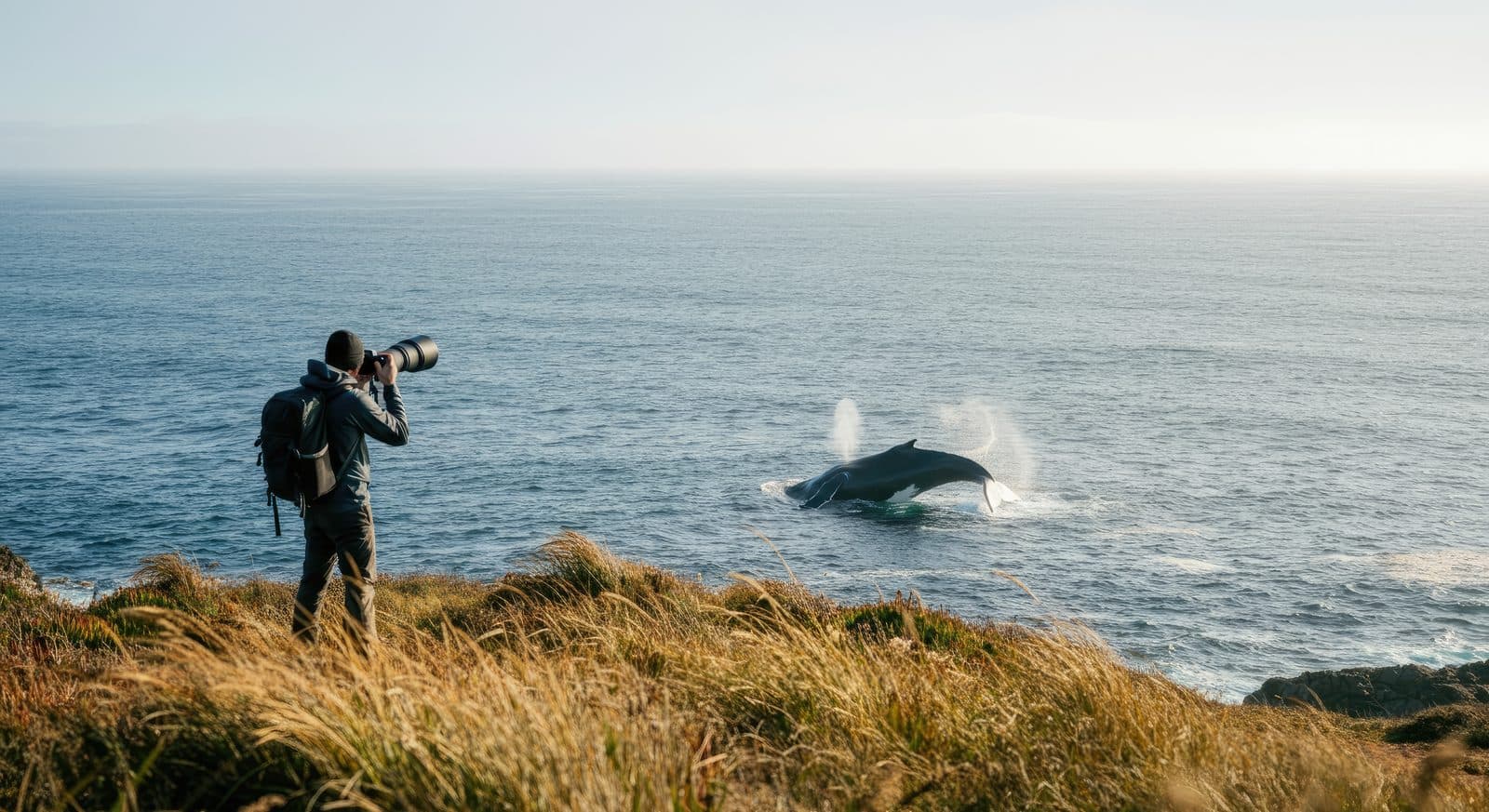
Glaciers calve from a mile away, whales surface for seconds, and your balcony view is competing with everyone else's balcony view. A compact pair of 8x or 10x binoculars turns a distant white smudge into an actual glacier face, and turns "was that a whale?" into a confirmed sighting. You don't need anything expensive, just something small enough to keep on you all day.
Why phone zoom isn't enough
Phone camera zoom on a moving ship, at a moving subject, from a few hundred yards, produces a blurry photo you'll never look at again. Binoculars give you the moment in real time, which is the point of an Alaska cruise: watching a glacier calve or a humpback breach, not photographing a smear of gray. Bring a camera too, but don't expect it to replace glass.
What magnification actually works on a ship
10x magnification is the sweet spot for Alaska. Anything higher amplifies the ship's engine vibration and your own hand shake, making the image harder to hold steady, especially from a moving vessel. The Compact Waterproof Binoculars (10x25) size is easy to hold one-handed while your other hand holds a coffee, which matters more than it sounds like on an early glacier-viewing morning.

Compact Waterproof Binoculars (10x25)
- 10x magnification with 25mm objective lens for crisp detail
- Compact folding design fits in a jacket pocket
Waterproof matters more here than anywhere else
Alaska ports and glacier days mean rain, sea spray, and condensation from temperature swings between a warm ship and cold outside air. Non-waterproof binoculars fog up internally and stay fogged, which ruins them for the rest of the trip. Waterproof, fog-resistant models are worth the small size and weight tradeoff on this specific itinerary. See our Alaska cruise guide for a full season-by-season breakdown of what conditions to expect.
Layer for the deck, not the cabin
Glacier Bay and Tracy Arm viewing happens on deck, often at dawn, often in wind that cuts through a light jacket fast. A Women's Packable Rain Jacket or an equivalent packable shell over layers keeps you out there long enough to actually use the binoculars instead of retreating to the cabin after five minutes.
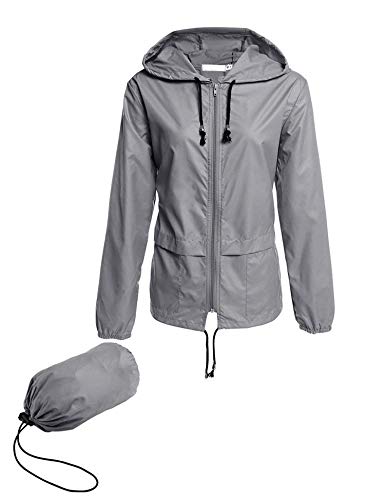
Women's Packable Rain Jacket
- Packs into its own pocket
- Waterproof and windproof for unexpected Caribbean showers and Alaska drizzle
Tropical showers come fast and hard, a packable jacket saves your excursion outfit
View on AmazonCapture what you can't hold in binoculars
For the moments worth keeping, an AKASO EK7000 4K Action Camera handles the wide shots of the glacier face and the fjord scenery that a phone struggles with in low light, and it survives the wet conditions that come with Alaska ports.

AKASO EK7000 4K Action Camera
- 4K video and 12MP photos at a fraction of GoPro price
- Waterproof case included
GoPro quality at a price you do not cry about if it falls in the ocean
View on AmazonCharge everything the night before
Cold weather drains batteries faster, and glacier-viewing mornings often start before the cabin coffee station opens. Keep an INIU 20000mAh Power Bank 65W charged and in your daypack so a dead phone or camera battery doesn't cost you the one clear view of the day.
Don't skip the flight prep
Most Alaska cruises start with a flight to Seattle, Vancouver, or Anchorage. Long-haul travel days plus a full excursion schedule add up fast. Compression Socks 3-Pack 15-20mmHg on the flight and Noise Cancelling Wireless Earbuds 80H for the ride make the first day of the trip less of a wash. Our full Alaska packing list covers the rest of the layering system.
What your binoculars need to survive, by excursion type
A whale-watching boat excursion is the toughest test for a pair of binoculars on an Alaska itinerary. Spray comes off the bow constantly, the deck rocks with the wake, and you're often bracing with one hand while trying to hold a steady view with the other. A neck strap isn't optional here, since a binocular set that slips from wet hands on a rocking boat deck is gone for the rest of the cruise.
A glacier hike or a shore-based viewpoint is gentler on gear but harder on your patience, since glacier calving events can take an hour of waiting for a few seconds of actual action. Lighter, smaller binoculars matter more here than ruggedness, since you're carrying them clipped to a daypack strap for hours of walking rather than bracing against boat spray for twenty minutes.
Scenic cruising days, when the ship moves slowly through a fjord or bay without a shore excursion, put the least physical stress on binoculars but the most demand on optical clarity. You're often viewing from a balcony or an open deck at a distance where a lower-quality lens shows visible blur or chromatic fringing around a distant glacier face, which a mid-range waterproof pair avoids.
Bear-viewing add-on excursions, offered at a handful of Alaska ports, combine the worst of both conditions: a bumpy transport ride to the viewing site and long, still waiting periods once you arrive. Bring a lens cloth in a dry pocket for this one specifically, since condensation from breath or damp air is common during long, quiet stretches of waiting for movement.
Across all four excursion types, a floating or brightly colored neck strap is worth the small extra cost. Alaska excursions frequently happen over water, from a boat deck or a dock, and a strap in a color that stands out against gray water and gray sky makes a dropped pair easier to spot and recover before it sinks.
Care and packing binoculars back for the flight home
Rinse the exterior with a damp, fresh-water cloth after any excursion involving sea spray, since dried salt residue left on housing seams can work into the hinge mechanism over repeated exposure and stiffen the focus wheel over time. Never rinse the lenses directly; wipe them separately with a dry microfiber cloth only.
Dry the strap and any fabric case fully before packing, since a damp case zipped into a suitcase for a flight home can develop a musty smell within a day, especially if the suitcase sits in transit for hours without airflow. Hang the case over a cabin chair overnight before your final packing day if it got wet on a boat excursion.
Store binoculars in their padded case rather than loose in a daypack side pocket for the flight home, since checked and carry-on luggage handling is rougher than a week of careful daypack use. A hard-shell or padded soft case protects the lens alignment from a single hard bump that a week of gentle cruise use never tested.
Check the focus wheel and diopter adjustment before your final pack-up, giving the binoculars one last look through a window or across the room. A wheel that's gone stiff from salt exposure or sand is easier to address at home with a proper cleaning than to discover on your next trip's first morning.
Fit is rarely a problem, since binoculars compress into almost no suitcase space compared to the rest of an Alaska packing list. The bigger consideration on the way home is making sure the case goes in a spot where it won't get crushed under the compression bags or a rolled-up rain jacket you packed on top of everything else.
Common questions
What magnification binoculars are best for an Alaska cruise?
8x to 10x magnification works best from a moving ship. Higher magnification amplifies hand shake and vibration, making it harder to hold a steady image on wildlife or glacier faces.
Do you need waterproof binoculars for Alaska?
Yes, more than for most other cruise itineraries. Rain, sea spray, and condensation from indoor-outdoor temperature swings are common in Alaska, and non-waterproof optics can fog internally and stay that way.
Are binoculars worth bringing if I have a good camera?
Yes. A camera captures a still image after the moment; binoculars let you actually watch the moment happen in real time, which matters for wildlife sightings that last only seconds.
Do I need a neck strap for cruise binoculars?
Yes, especially for boat-based excursions. A neck strap, ideally in a bright or floating-friendly color, prevents a dropped pair from being lost overboard on a rocking whale-watching boat or a windy open deck, and it frees up a hand for balance or a coffee.
Can binoculars fog up permanently on an Alaska cruise?
Non-waterproof, non-nitrogen-purged binoculars can develop internal fogging from repeated temperature swings between a warm ship interior and cold outside air, and that fogging often doesn't clear on its own. Waterproof, fog-resistant models are built specifically to prevent this and are worth the modest price difference for this itinerary.
Pack binoculars, a packable rain layer, and a charged power bank before you worry about anything else on the Alaska packing list. Everything else on the trip is more forgiving than missing the one clear glacier view because your gear wasn't ready. Browse Alaska cruises and check port details for your specific glacier stops before you sail.