
A good travel mug solves a specific cruise problem: the free coffee station is rarely near your cabin, and specialty coffee shops on board charge per cup and close overnight. A spill-proof, well-insulated mug means one coffee run covers a longer stretch of your morning instead of a second trip across the ship.
Why the free coffee station isn't enough on its own
Most ships have a self-serve coffee station near the buffet included in the base fare, which is convenient if your cabin happens to be nearby and inconvenient if it's several decks away. A well-insulated travel mug lets you grab a full mug's worth on the way back to the cabin or out to a lounge chair, rather than needing to return for a refill every hour.
Insulation matters more on a ship than at home
Deck coffee in direct sun cools slower than you'd think, but cabin air conditioning does the opposite indoors, cooling a mug fast if it isn't insulated. A double-wall insulated mug keeps coffee actually hot for the walk from the buffet to your balcony or a top-deck lounge chair, which is often a longer walk than people expect on a large ship.
Spill-proof matters on a moving ship
Ships roll more than people expect on rougher sea days, and a mug without a secure, splash-proof lid means coffee ends up on your shirt or the cabin carpet at some point during the week. A screw-top or locking lid is worth prioritizing over a simple flip-top for this reason specifically.
Keep your electronics charged for the coffee routine
An early coffee run before a port day often means you're also grabbing your phone, camera, and excursion tickets on the way out. Keep a Mifaso Cruise-Approved Power Strip plugged in overnight so everything's topped off by the time you're heading out for morning coffee and an early excursion. See our cruise-approved power strip guide for what's actually allowed on board.

Mifaso Cruise-Approved Power Strip
- Cruise-approved (no surge protector) with multiple USB ports
- Compact design fits perfectly on the narrow cabin nightstand
Cruise cabins have limited outlets, this solves the charging problem without tripping ship safety rules
View on AmazonA second outlet for the whole cabin routine
Standard cabins often have limited outlet access near the desk or nightstand, which becomes a bottleneck when you're charging a phone, a camera, and a power bank all before an early excursion. An Addtam Cruise Approved Power Strip or NTONPOWER 20W Travel Power Strip USB-C solves that bottleneck without needing a hotel-style multi-adapter setup.
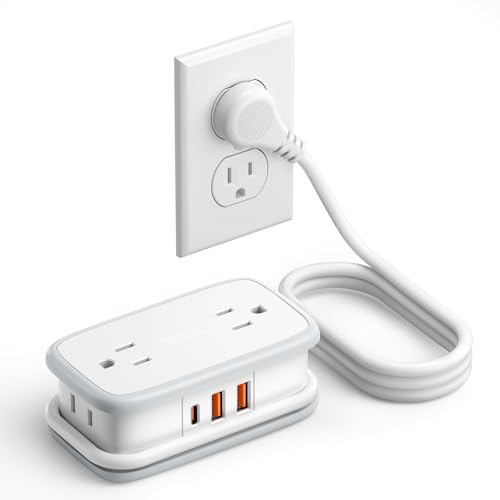
NTONPOWER 20W Travel Power Strip USB-C
- 20W USB-C Power Delivery for fast-charging iPhones and iPads
- Ultra-compact travel design fits in any bag
20W PD output charges an iPhone to 50% in about 30 minutes between excursions
View on AmazonCabin fans help on hot-itinerary sailings
A hot Caribbean sailing means your morning coffee routine competes with a cabin that hasn't cooled down overnight from the previous day's heat. A Koonie USB Desk Fan running quietly overnight keeps the cabin comfortable enough that an early coffee and excursion prep doesn't start off sweaty.

Koonie USB Desk Fan
- Quiet USB-powered desk fan for better cabin air circulation
- Adjustable angle directs airflow where you need it
Interior cabins can get stuffy, a personal fan makes sleeping much more comfortable
View on AmazonMatch the mug to your actual routine
A large-capacity mug matters more if your cabin is far from the coffee station and you're not making multiple trips. A smaller, more packable mug matters more if you're bringing it on shore for a port-day coffee stop rather than just using it on board. Consider which problem you're actually solving before picking size over insulation, or the reverse.
How to choose a travel mug that actually holds up on a ship
Lid mechanism matters more than material or color for a cruise-specific mug. A screw-top lid with a rubber gasket handles a rolling ship far better than a press-button flip lid, which can pop open under pressure from being jostled in a daypack or knocked against a railing on a windy deck.
Ignore mugs marketed primarily for car cup holders, since ship cabins and daypacks don't have the same fixed cup-holder geometry a car does. A mug that's wider at the base for stability on a flat surface, a nightstand or a lounge chair table, matters more on a cruise than one shaped to fit a specific cup holder diameter.
Check the handle or grip design if you're planning to carry the mug through a buffet line or up a set of stairs to a top deck. A mug with a secure loop handle or a textured grip band is easier to carry one-handed through a crowded walkway than a smooth cylindrical design that's more prone to slipping from a wet or sunscreen-covered hand.
For port-day use, weigh portability against insulation performance. A mug rated for 12 hours of heat retention is overkill for a short coffee stop in town, and a lighter, less bulky mug that still holds heat for an hour or two covers a port-day coffee run without adding unnecessary weight to a daypack already carrying sunscreen and a water bottle.
Skip mugs with elaborate branding or a novelty ship shape if you're prioritizing function, since these features add cost without improving insulation, spill resistance, or grip. A plain double-wall stainless mug with a locking lid outperforms a themed novelty mug on every practical measure that matters for a week of daily use.
Common mistakes with cruise coffee mugs
The most common mistake is bringing a mug with a simple flip-top lid and being surprised when it leaks in a daypack or a beach bag during a port day, soaking a phone or a passport copy nearby. Test any new mug's lid seal at home before the trip by filling it with water and turning it upside down over a sink.
Assuming the ship's coffee station coffee stays hot long enough to walk it slowly back to a far cabin without an insulated mug is a frequent letdown, especially on larger ships where the walk from the buffet to a cabin can take several minutes. Insulation matters more the farther your cabin sits from the main coffee station, which is worth checking on the deck plan before the cruise.
Packing a glass or ceramic travel mug instead of a shatter-resistant stainless or hard plastic option is a risk on a moving ship, where a mug knocked off a nightstand during rougher seas can break and create a genuine hazard in a small cabin. Stick to stainless steel or a durable BPA-free plastic for anything coming on board.
Forgetting to rinse the mug daily and letting coffee residue build up over a week-long cruise leads to a mug that affects the taste of each new cup by the back half of the trip. A quick rinse with the cabin sink each morning or evening keeps the mug performing the same on day seven as it did on day one.
Not accounting for outlet competition when planning an electric coffee routine, assuming the cabin has enough outlets for a mug warmer, a phone charger, and a camera battery all at once, leads to a scramble each morning. A small travel power strip solves this cheaply and is worth packing alongside the mug itself if your morning routine involves more than one device charging at a time.
Common questions
Is a travel mug worth bringing on a cruise?
Yes, especially if your cabin is far from the buffet or coffee station, since it reduces repeat trips and keeps coffee hot for longer during pool deck or balcony time.
Do cruise ships have free coffee?
Most ships offer a self-serve coffee station included in the base cruise fare, typically near the buffet, alongside paid specialty coffee shops elsewhere on the ship that charge per drink.
What kind of lid works best for a cruise travel mug?
A screw-top or locking lid handles rougher sea days and a moving ship better than a simple flip-top, reducing the chance of a spill in the cabin or on deck.
Can I bring my travel mug off the ship at port?
Yes, most ports don't restrict bringing a personal mug ashore, and it's a practical way to carry coffee from a port-side café back toward the ship or during a walking excursion. Rinse it out before returning to the buffet coffee station to avoid mixing flavors from an outside brew.
How do you keep a travel mug from smelling stale mid-cruise?
Rinse it with fresh water after every use rather than letting it sit with residue until the next morning, and leave the lid off to air dry whenever it's not in active use. A cabin bathroom counter works fine for this, and it prevents the trapped, humid conditions that lead to a stale smell by the middle of a longer sailing.
Pack a well-insulated, spill-proof mug sized to your actual coffee routine, and keep the outlets in your cabin working for you rather than against you with a cruise-approved power strip. Small setup, but it removes a daily annoyance for the whole trip. Browse cruises and check your ship's deck plan for how far your cabin sits from the main coffee station.