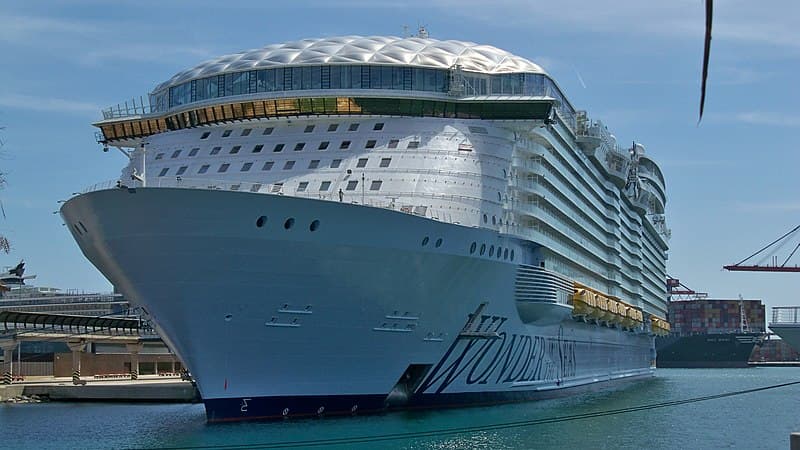

Modern cruise ships are among the most complex machines ever built. A vessel like Icon of the Seas is a self-contained floating city with the power generation of a small town, water production for 10,000+ people daily, and technology that would have seemed like science fiction a generation ago.
This guide explores the engineering marvels that make cruise ships possible.
Ready to book a cruise? Browse 12,000+ live cruise deals on Cruisebound. Filter by destination, length, cabin type, and departure port to see today's pricing before you keep reading.
Propulsion Systems
Traditional Diesel-Electric Power
Most cruise ships use diesel-electric propulsion, a system that provides flexibility and efficiency:
How it works:
Multiple diesel generators produce electricity (typically 4-6 generators)
The electrical power is distributed to onboard systems and propulsion motors
Electric motors drive the propellers
Generators run at optimal speed regardless of ship speed, saving fuel
Advantages:
Redundancy (multiple generators mean backup power)
Fuel efficiency at varying speeds
Reduced vibration and noise
Flexibility in power distribution
Azipod Propulsion
Azipod® systems revolutionized cruise ship maneuverability. Developed by ABB and first installed on a cruise ship in 1998 (Carnival's Elation), Azipods are now standard on most new builds.
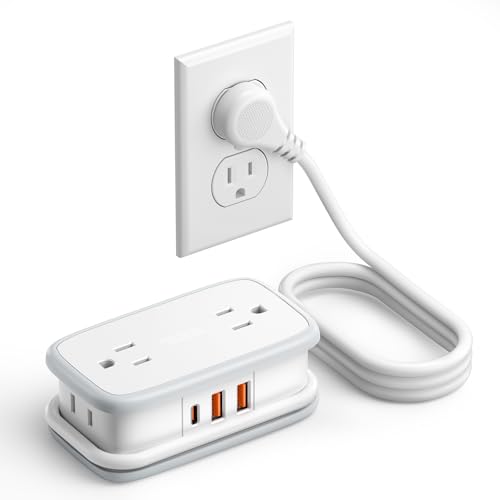
NTONPOWER 20W Travel Power Strip USB-C
- 20W USB-C Power Delivery for fast-charging iPhones and iPads
- Ultra-compact travel design fits in any bag
20W PD output charges an iPhone to 50% in about 30 minutes between excursions
View on Amazon
NTONPOWER Travel Power Strip (4FT Cord)
- 4-foot extension cord reaches from any cabin outlet to your nightstand or desk
- Multiple outlets plus USB ports
The 4-foot cord is a game-changer when the only outlet is behind the vanity mirror
View on Amazon
OHOVIV 50,000mAh Portable Power Bank
- 50,000mAh capacity charges phones 8-10 times over
- Not flight-legal, ~185Wh exceeds the 160Wh airline limit, so it is barred from carry-on and checked bags
How Azipods work:
The electric motor is housed in a pod below the hull
The pod can rotate 360 degrees
Eliminates the need for traditional rudders and shaft lines
Typically installed in pairs at the stern
Azipod benefits:
Maneuverability: Ships can turn in their own length, dock without tugboats
Fuel efficiency: Up to 20% reduction compared to traditional propulsion
Safety: Ships can steer during emergency stops and stop 50% faster
Vibration: Smoother ride with less mechanical vibration
Space: No need for engine rooms aft, freeing interior space
Ships using Azipods: All Royal Caribbean Voyager-, Freedom-, Oasis-, and Icon-class ships feature Azipod propulsion, as do most new builds from major cruise lines.
LNG-Powered Ships
Liquefied Natural Gas (LNG) represents the future of cruise ship propulsion. Carnival Corporation pioneered LNG cruise ships with the AIDAnova in 2018.
LNG-powered cruise ships:
Icon of the Seas. Royal Caribbean
Mardi Gras. Carnival
Environmental benefits:
Emission | Reduction vs. Traditional Fuel |
|---|---|
CO2 | 20-25% less |
Sulfur oxides (SOx) | Nearly 100% elimination |
Nitrogen oxides (NOx) | 85% reduction |
Particulate matter | 95-100% elimination |
How LNG works:
Natural gas is cooled to -260°F (-162°C), becoming liquid
Stored in massive insulated tanks (typically double-walled)
Regasified and burned in dual-fuel engines
Can switch between LNG and traditional marine diesel
Future technologies: Cruise lines are also testing methanol, hydrogen fuel cells, and even wind-assisted propulsion for next-generation ships.
Ship Tracking Technology
AIS (Automatic Identification System)
Every cruise ship continuously broadcasts its position via AIS, the technology that powers our live ship tracking map.
What AIS transmits:
MMSI number. Unique ship identifier
Ship name and callsign
Position. GPS coordinates updated every few seconds
Speed over ground (SOG). Current speed in knots
Course over ground (COG). Direction of travel
Heading. Direction the bow is pointing
Destination. Next port of call
ETA. Estimated arrival time
Ship dimensions. Length, beam, draft
How AIS tracking works:
Ship transponders broadcast VHF radio signals
Land-based receivers capture signals (range: 50-100 nautical miles)
Satellite receivers extend coverage to open ocean
Data is aggregated and displayed on tracking websites
AIS classes:
Class A: Required for all commercial vessels over 300 GT (all cruise ships)
Class B: Optional for smaller vessels
Navigation Bridge Systems
Modern cruise ship bridges integrate multiple technologies:
ECDIS (Electronic Chart Display):
Digital nautical charts replace paper
Real-time position overlay
Route planning and monitoring
Automatic warnings for shallow water, traffic, etc.
Radar and ARPA:
Automatic Radar Plotting Aid tracks other vessels
Collision avoidance calculations
Integration with AIS data
Dynamic Positioning (DP):
Computer-controlled thrusters maintain position
Used for tender operations and port approaches
GPS-referenced positioning within meters
Weather routing:
Software optimizes routes for fuel efficiency
Avoids severe weather
Real-time satellite weather data
Stabilization Systems
Nobody wants a rocky cruise. Modern ships use multiple systems to minimize rolling and pitching.
Stabilizer Fins
Retractable fins extend from the hull below the waterline:
How they work:
Gyroscopic sensors detect ship motion
Computer adjusts fin angles up to 50 times per second
Fins create lift force opposing the roll
Can reduce rolling by up to 90%
Specifications:
Typical size: 20-30 feet long, 5-8 feet wide
Extend up to 15 feet from hull
Retract completely when not needed (port visits)
Hull Design
Modern cruise ship hulls are designed for stability:
Wide beam: Larger ships have beam-to-length ratios optimized for stability
Deep draft: More hull underwater means lower center of gravity
Bulbous bow: Reduces wave resistance and improves fuel efficiency
Flared hull: Disperses wave energy before it reaches the ship
Why Some Cruises Are Smoother
Factors affecting ship motion:
Ship size: Larger ships move less in the same conditions
Itinerary: Protected waters (Inside Passage, Caribbean) calmer than open ocean (transatlantic)
Season: Weather patterns affect wave heights
Cabin location: Mid-ship, lower decks experience least motion
Water and Waste Systems

Mifaso Cruise-Approved Power Strip
- Cruise-approved (no surge protector) with multiple USB ports
- Compact design fits perfectly on the narrow cabin nightstand
Cruise cabins have limited outlets, this solves the charging problem without tripping ship safety rules
View on AmazonA cruise ship carrying 7,000+ guests and crew needs to produce and process enormous amounts of water.
Fresh Water Production
Reverse osmosis desalination:
Seawater is pressurized through membranes
Salt and impurities are removed
Produces potable water cleaner than most tap water
Large ships produce 200,000-400,000 gallons daily
Water uses:
Use | Daily Consumption |
|---|---|
Drinking/cooking | 25-40 gallons per person |
Showers/sinks | 40-60 gallons per person |
Pools/hot tubs | Varies, seawater often used |
Laundry | Thousands of gallons |
Waste Treatment
Gray water (sinks, showers, laundry):
Filtered and treated onboard
Discharged at sea in approved areas
Some ships recycle for non-potable uses
Black water (toilets):
Processed in advanced marine sanitation devices
Biological treatment breaks down waste
Meets or exceeds land-based treatment standards
Can be discharged in international waters or stored for shore disposal
Solid waste:
Food waste processed in pulpers, discharged at sea (biodegradable only)
Recyclables sorted and stored for port disposal
Remaining waste incinerated or stored
Strict MARPOL regulations govern disposal
Environmental note: Cruise ships are held to increasingly strict environmental standards, with many exceeding regulatory requirements.
Power Generation
A large cruise ship needs more power than many small cities.
Power Requirements
System | Power Consumption |
|---|---|
Propulsion (full speed) | 40-80 MW |
Hotel load (AC, lights, etc.) | 15-30 MW |
Total installed capacity | 80-120 MW |
For comparison, Icon of the Seas has a generating capacity that could power approximately 75,000 homes.
Power Distribution
Electrical systems:
High-voltage (11,000V) for propulsion motors
Medium-voltage (6,600V) for large equipment
Low-voltage (440V/220V/110V) for cabins and small equipment
Emergency generators provide backup power
Why diesel-electric?
Generators run at optimal speed regardless of ship speed
Multiple generators provide redundancy
Power can be directed where needed (propulsion vs. hotel load)
Single failure doesn't disable the ship
Safety Systems
Modern cruise ships exceed safety requirements with multiple redundant systems.
Lifeboats and Life Rafts
Lifeboat capacity:
Ships carry enough lifeboats for 125% of capacity
Enclosed, partially enclosed, or open designs
Motor-powered for maneuvering away from ship
Supplies for extended survival
Evacuation systems:
MES (Marine Evacuation Systems). Slide-type evacuation to life rafts
Can evacuate entire ship in under 30 minutes
Regular drills required by maritime law
Fire Suppression
Cruise ships have extensive fire detection and suppression:
Smoke detectors in every cabin and public space
Heat detectors in kitchens and engine rooms
Automatic sprinklers throughout accommodation areas
CO2 flooding systems for engine rooms
Water mist systems for machinery spaces
Fire doors automatically close to contain spread
Dedicated fire teams trained for shipboard firefighting
Watertight Integrity
Compartmentalization:
Ships are divided into watertight sections by bulkheads
Watertight doors close automatically during emergencies
Modern ships can stay afloat with multiple compartments flooded
Far exceeds Titanic-era "two compartment" standards
Damage stability:
Computers calculate stability if any compartment floods
Officers train for damage control scenarios
Double hulls protect critical areas
Smart Ship Technology
The newest cruise ships feature connected technology throughout.
Wearable Technology
Ocean Medallion (Princess):
Wearable device replaces cruise card
Unlocks cabin door automatically
Enables touchless purchases
Location services for finding friends
Crew can anticipate guest needs
MSC for Me:
Virtual assistant via app and cabin TV
Navigation guidance on ship
Personalized recommendations
Digital payments
Cabin Automation
Modern suites feature:
Voice-controlled lighting and climate
App-controlled TV and entertainment
Smart mirrors with information displays
Automatic room service ordering
Guest Experience Technology
Facial recognition boarding. Skip document checks
Robotic bartenders. Precision cocktails at Bionic Bar (Royal Caribbean)
Digital art galleries. Changing displays throughout ship
RFID luggage tracking. Know where your bags are
Virtual balconies. LED screens show real-time ocean views in interior cabins
The Future of Cruise Ship Technology
Technologies in development:
Hydrogen fuel cells. Zero-emission power generation
Wind-assisted propulsion. Rotor sails and kite systems
Battery-hybrid systems. Shore power storage for port visits
Air lubrication, Bubbles under hull reduce drag
AI route optimization, Machine learning for fuel efficiency
Explore Ship Specifications
Want to see the technical details of specific ships? Browse our ship database: