Disney Cruise Line is the easiest cruise line in the world to describe and the hardest to price-justify on paper. They charge more than anyone else in the mainstream-to-premium tier. The ships are smaller than their competitors. There are no casinos. The adult programming is limited. And the waitlist for certain sailings stretches years.
None of that matters if you're traveling with children who care about Disney characters. Disney Cruise Line is the only cruise experience where your daughter meets Elsa at breakfast, your son rides the AquaDuck waterslide at sea, and the entire ship transforms for a Pirates in the Caribbean deck party. The Disney difference is complete, intentional, and extraordinarily well-executed. You're not paying for a cruise. You're paying for a Disney experience that happens to be on a ship.
Overview: What Disney Does Best
Disney Cruise Line launched in 1998 as a complement to Walt Disney World. A natural extension of the family vacation ecosystem. Headquartered in Celebration, Florida, DCL now operates 6 ships (with Disney Adventure debuting in 2026) and focuses primarily on Caribbean and Bahamian itineraries from Port Canaveral and Miami, with seasonal sailings from New York, the West Coast, and European ports.
The Disney thesis: don't compromise anything. The ships are beautifully designed in a classic ocean liner aesthetic. The kind of sweeping atrium and grand staircase you associate with the golden age of cruising, not with family vacations. The entertainment includes original Broadway-caliber productions developed specifically for DCL, not licensed from existing shows. The food is better than any other mainstream family-cruise line. The character experiences are meticulously executed. Meet-and-greets are designed as genuine moments, not fast-food photo ops.
The honest cost assessment: Disney Cruise Line consistently prices 40-80% above comparable Royal Caribbean sailings. A 7-night Caribbean cruise in a standard balcony cabin for a family of four frequently runs $8,000-$15,000 all-in. There are no real budget workarounds. Disney prices confidently and doesn't discount heavily. If that's prohibitive, Royal Caribbean with good shore excursion planning delivers most of the family-vacation value at lower cost.
For families where budget allows, Disney consistently earns the highest customer satisfaction scores in cruising. They've earned that reputation by refusing to cut corners even where the savings would be invisible to most passengers.
The Fleet
Planning a Disney cruise? Browse Disney sailings on Cruisebound to compare Bahamas, Caribbean, and European itineraries with live cabin pricing.
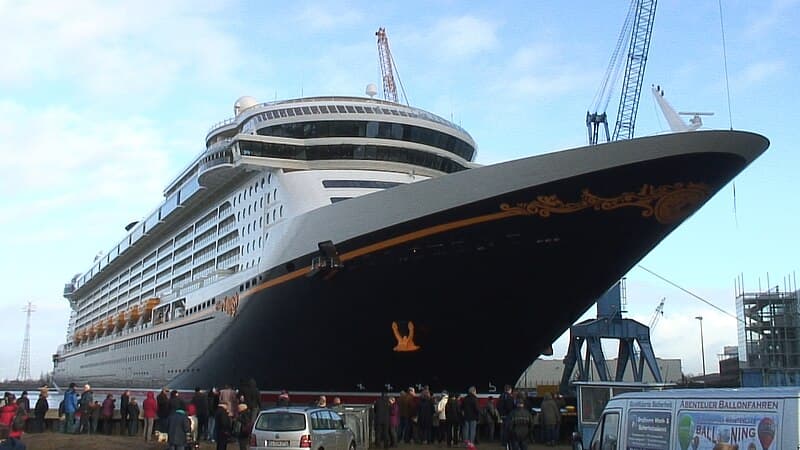
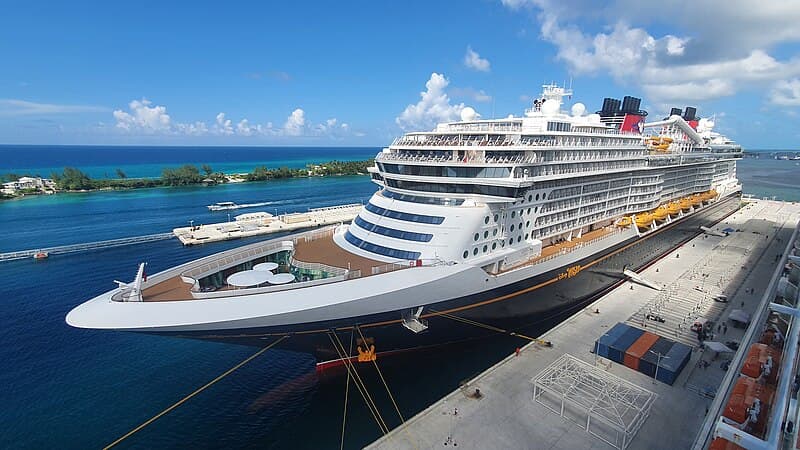
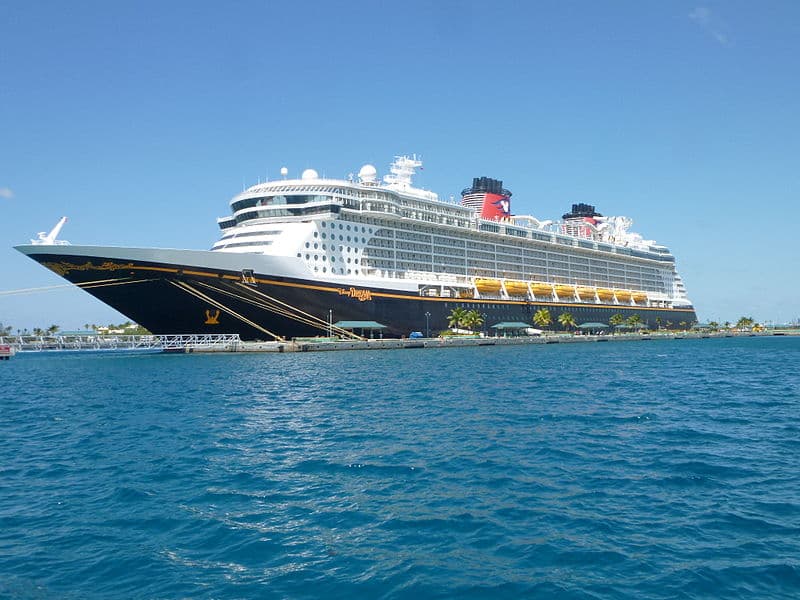
Disney's fleet is small by mainstream standards. Intentionally so. Five ships (six with Disney Adventure), each with a distinct personality:
Triton Class (the newest, largest ships)
Disney Adventure. 208,000 GT, 6,700 passengers, 2025. The largest Disney ship ever built. Homeporting in Singapore. Focused on Asia-Pacific market. Features the first-ever Star Wars: Hyperspace Lounge, a rotating lineup of Marvel and Pixar themed areas.
Disney Treasure. 144,000 GT, 4,000 passengers, 2024. Adventure and exploration theme. The Haunted Mansion Grand Salon, Worlds of Marvel restaurant, and Perona's Table from The Little Mermaid.
Disney Wish. 144,000 GT, 4,000 passengers, 2022. The original "storytelling" class ship. First at-sea AquaMouse attraction (Pixar water coaster). Worlds of Marvel dining.
Dream Class
Disney Fantasy. 130,000 GT, 4,000 passengers, 2012. Seven-night Caribbean itineraries primarily. Art nouveau design. AquaDuck waterslide.
Disney Dream. 130,000 GT, 4,000 passengers, 2011. The original Dream-class ship. Eastern Caribbean and Bahamian itineraries from Port Canaveral.
The fleet is small enough that individual ship choice matters less on Disney than on other lines. All five ships share the core Disney experience. The Wish and Treasure are the newest and have the most advanced themed venues, but Dream and Fantasy have had years of operational refinement and consistently deliver excellent experiences.
Disney Adventure in Singapore is a specific product for Asia-Pacific travelers. If you're planning a Southeast Asia trip and have Disney-loving children, note as a cruise port option that connects with Singapore's broader tourism offerings.
Destinations & Itineraries
Caribbean and Bahamas dominate DCL's routing. Castaway Cay, Disney's private island in the Bahamas, is the signature destination and one of the best-executed private islands in the cruise industry. Unlike competitors who bolt waterslides onto a beach, Disney has built a fully themed experience: multiple beach areas including a dedicated adult beach (Serenity Bay), a tram system that moves guests around the island, family waterslide complexes, snorkeling trails, bike rentals, and a full-service barbecue buffet. Most importantly, it's never shared with other cruise lines. Only Disney ships call at Castaway Cay, keeping passenger density low.
The most common itinerary structure: 3 or 4-night Bahamian sailings (Port Canaveral to Nassau and Castaway Cay) and 7-night Caribbean sailings stopping at Castaway Cay plus ports like St. Thomas, St. Maarten, Cozumel, or Grand Cayman. The 7-night Eastern and Western Caribbean loops from Port Canaveral are the most popular Disney sailings.
Mediterranean sailings run in summer. Typically June through August. With itineraries covering the Western Med (Barcelona, Palma, Villefranchem, Florence/Livorno, Rome) and Eastern Med. These sailings are significantly more expensive than the Caribbean equivalents and sell out well in advance. Disney families who want Europe tend to book 12+ months ahead.
Alaska and Westcoast sailings from Vancouver and Seattle cover Glacier Bay, Tracy Arm, Ketchikan, and Skagway on 7-night itineraries during summer. These are excellent itineraries that work well even for younger children. Whale watching, glacier viewing, and small-town port experiences align well with the Disney sense of wonder.
New York sailings in fall and spring offer short Bahamian and Bermuda itineraries for East Coast families who prefer to skip the Port Canaveral drive. Useful market for DCL; not the flagship experience.
Dining
Disney uses rotational dining. You visit each of the main dining rooms across your cruise, and your server team rotates with you. It sounds gimmicky but it works brilliantly for two reasons: kids develop a genuine relationship with the servers over the week (often a highlight of the cruise for children), and the themed environments create meaningful variety without requiring specialty dining decisions every night.
On Disney Wish and Treasure, the rotational dining rooms are: Worlds of Marvel (Avengers theming with interactive elements during the meal), Arendelle. A Frozen Dining Adventure (immersive Frozen musical with Anna, Elsa, and Kristoff performing throughout the dinner), and 1923 (a tribute to the early Walt Disney Studios, more adult-focused). These aren't just themed rooms with a Disney poster on the wall. They're full theatrical experiences integrated into the meal service.
Palo is the adults-only specialty restaurant on all Disney ships. An Italian-inspired brunch and dinner venue with arguably the best included-tier food quality in DCL's own lineup. Palo brunch ($45/person) is a cruise institution among Disney loyalists. Book it during the first-day registration window or you won't get it. Remy on Dream and Fantasy is a step above Palo: a multi-course French tasting menu at $120-$145/person that competes with fine-dining restaurants ashore. Worth it for a special occasion.
Buffet options (Cabanas on all ships) are typical cruise buffet quality. Generous variety, adequate execution. The pool-deck quick-service options (pizza, burgers, sandwiches) are better than average and part of the included fare. No nickel-and-diming on basic food. If it's not a specialty restaurant, it's included.
Beverage: Disney charges for alcohol separately. Adult beverages at the bar, beer, and wine are additional cost. There's no beverage package in the traditional sense. Disney doesn't bundle alcohol. Soft drinks and non-alcoholic specialty drinks are more broadly included than on competitor lines. If you're a heavy drinker, factor bar bills into your budget.
Entertainment & Activities
Disney's entertainment is the clearest reason to pay the premium. The Broadway-caliber theatrical productions on Disney ships are original shows developed specifically for DCL. Not licensed from existing productions but created from scratch with original music, costuming, and choreography. Tangled: The Musical (Dream-class), The Little Mermaid, and Frozen. A Musical Spectacular have production values that rival major theme-park shows. These shows are included in your fare and typically run twice during a 7-night sailing.
Character experiences are where Disney consistently outperforms every competitor's "character at sea" offering. The meet-and-greet design ensures each character interaction gets proper time and photography. Not a rushed 20-second handshake. Character breakfasts, deck parties with full cast appearances, and the Pirates in the Caribbean night (deck party with Disney villains, fake cannon fire, and fireworks at sea. The only cruise line permitted to do fireworks at sea) are experiences that genuinely don't exist elsewhere.
The AquaMouse on Disney Wish and Treasure is a water coaster attraction using water jets to propel guests through tubes. A step beyond the passive slide. The AquaDuck on Dream and Fantasy is a traditional tube waterslide cantilevered over the ocean. Both are excellent family attractions. Neither competes with Royal Caribbean's Category 6 waterpark on Icon of the Seas, but they're well-executed for a line that prioritizes themed experience over thrill count.
Marvel Day at Sea is an add-on event on selected sailings. A full day of Marvel character experiences, a deck show with Spider-Man, Iron Man, Thor, and others, exclusive merchandise, and themed food and cocktails throughout the ship. It's an additional charge (roughly $100-$150/person) and sells out fast. Worth it for Marvel families who sail at compatible times.
What Disney doesn't offer: casinos (completely absent), adult nightlife beyond a few bars, gambling of any kind, and the kind of high-energy pool deck programming that Carnival and Royal Caribbean use to fill sea days. The adult programming is deliberately subdued. Serenity Bay on Castaway Cay and Quiet Cove (adults-only pool area on ships) are the concessions to passengers who need some child-free time.
Cabins & Staterooms
Disney's cabin sizing is generous by mainstream standards. Standard oceanview cabins run 214 square feet on the Dream and Wish classes. Significantly larger than the 150-170 sq ft interiors on competitor lines. Balcony staterooms at 270-295 square feet are among the largest standard balcony cabins in the cruise industry.
The split-bathroom design on most Disney cabins, toilet separate from shower, is purpose-built for families. When four people share a cabin in the morning, two can be using the facilities simultaneously. This seems like a small thing until you're actually on day 4 of a cruise with two children and the morning routine gets real.
Concierge staterooms (Disney's suite tier) include access to the Concierge Lounge. Complimentary cocktails during evening hours, a dedicated concierge team, priority boarding, early restaurant booking, and reserved seats at theater shows. The lounge is smaller and more intimate than Norwegian's Haven or Celebrity's Retreat, but the service level is consistent. Disney Concierge pricing is among the highest in mainstream cruising. Expect $1,500-$3,000+ per person per night on Caribbean sailings for the top suites. It's a different price class than NCL's Haven or Celebrity's Retreat Sky Suites.
One DCL cabin feature worth noting: the Tileable beds. Many Disney staterooms can configure as either two twins or a queen, with an upper berth (foldaway) for a third person. The storage under the lower berths is substantial. Disney has clearly thought about how families actually live in the space during a cruise in a way most lines haven't.
Loyalty Program: Castaway Club
Disney's Castaway Club tiers: Silver (1-4 cruises), Gold (5-9 cruises), Platinum (10+ cruises), Pearl (25+ cruises). Benefits are modest by loyalty program standards: early online check-in, priority boarding, exclusive port arrival times, and a Castaway Club exclusive onboard reception.
The program's most valuable perk is the advance booking window. Platinum members book specialty dining, onboard activities, and excursions earlier than Gold, who books earlier than Silver. On oversubscribed experiences, Palo brunch, Remy dinner, character meet-and-greets, that booking window can be the difference between getting your first choice and having nothing available. For families who cruise Disney regularly, the Platinum advance window is meaningfully valuable.
Castaway Club doesn't offer daily perks like drink vouchers (Crown & Anchor) or Happy Hours (Captain's Club). Disney's loyalty program is thinner on daily value than competitors. The real reward for repeat Disney cruisers is familiarity with how the product works, not the formal benefit structure. Most Disney loyalists sail again because the product is excellent, not because the loyalty program compels them.
Pros & Cons
Pros:
Best character integration in the cruise industry. Properly staged, not rushed
Castaway Cay is the best-operated private island in mainstream cruising
Rotational dining with theatrical theming (Frozen, Avengers) is genuinely memorable
Original Broadway-caliber entertainment produced exclusively for DCL
Palo and Remy specialty dining are exceptional. Remy competes with restaurants ashore
Cabin design (split bath, generous square footage, family-focused storage) is best-in-class for family travel
Pirates in the Caribbean deck party with fireworks is the most spectacular deck event in cruising
No casino, no pressure. The environment is intentionally family-first
Cons:
Most expensive mainstream cruise line. Typically 40-80% above comparable Royal Caribbean sailings
Adult programming is limited. No casino, subdued nightlife, minimal adult entertainment options
Fleet is small. Only 5 ships versus 29 at Royal Caribbean and 28 at Carnival
Bookings require 12+ months advance planning for peak sailings and popular cabin categories
No beverage package. Alcohol is purely a la carte with no bundle option
Concierge suite pricing is among the highest in mainstream cruising
Limited itinerary variety compared to larger lines, Caribbean/Bahamas dominates the sailing schedule
Pricing
Disney Cruise Line pricing requires a different mental model than other cruise lines. There are no Last Minute deals in the traditional sense. There are no flash sales. Disney doesn't heavily discount, they have enough demand at full price that they don't need to. If you want to sail Disney, you pay Disney's price or you wait for a last-minute cabin release, which is rare.
A baseline 4-night Bahamian sailing (Port Canaveral to Nassau and Castaway Cay) for a family of four in a standard oceanview cabin runs $4,000-$7,000 depending on season and sailing date. A 7-night Eastern Caribbean sailing in a balcony cabin for a family of four: $8,000-$14,000. Peak holiday sailings (Christmas, spring break, summer) push the top of those ranges significantly higher.
Disney sailings don't appear on Cruisebound because Disney distributes exclusively through Disney's own booking system and select authorized travel agents. This is a deliberate distribution decision, Disney controls pricing and the booking experience.
The practical implication: if budget is a genuine constraint, Disney Cruise Line is the wrong choice for a 2026 cruise. If you want the Disney experience and budget allows, book as far in advance as possible (Disney opens bookings 12-18 months out for Platinum/Gold Castaway Club members, earlier for Concierge). The best cabins and popular sailing dates go fast.
Final Verdict
Disney Cruise Line is the best family cruise experience in the world for families who care about Disney characters, animated films, and the intentional magic Disney creates. That's a specific value proposition, and it's delivered at a level of quality and consistency no competitor approaches. The character experiences are unmatched, Castaway Cay is the best private island in cruising, the theatrical dining is memorable, and the cabin design reflects how families actually use the space.
The cost is the biggest objection and it's a legitimate one. You will pay significantly more than comparable Royal Caribbean or Norwegian sailings for a smaller ship, fewer onboard activities, and no casino. If the Disney characters and IP aren't the primary motivation for the trip, the premium doesn't make sense.
For families with young children who love Disney, and especially for families visiting both Walt Disney World and taking a cruise as part of a Florida trip, Disney Cruise Line is the right answer. The Port Canaveral location is 45 minutes from the parks, and many families combine a 3-4 day Walt Disney World stay with a 4 or 7-night cruise for what amounts to the definitive Disney family vacation. It's expensive. It delivers on the promise completely.
Best for: Families with young Disney fans, anniversary and honeymoon travelers who want magic over nightlife, and anyone for whom the character experiences and Castaway Cay justify the premium.
Disclosure: Some links on this page are affiliate links. When you book through Cruisebound via our links, we may earn a commission at no extra cost to you. This doesn't influence our reviews.
Disney sailings book up fast. See live Disney Cruise Line deals and snag a date before peak holiday windows fill.