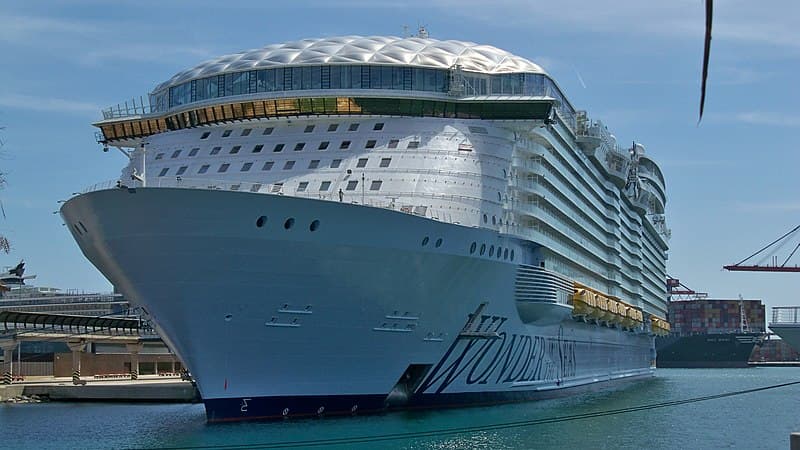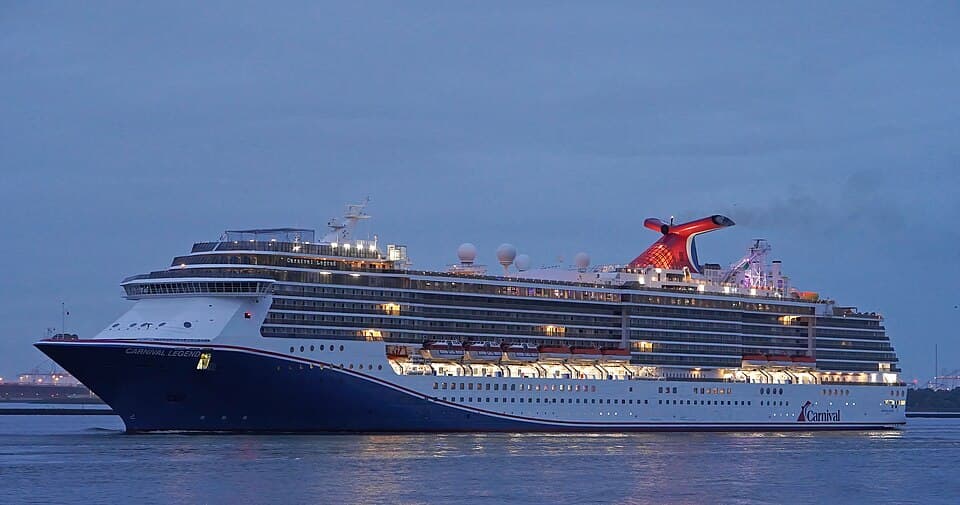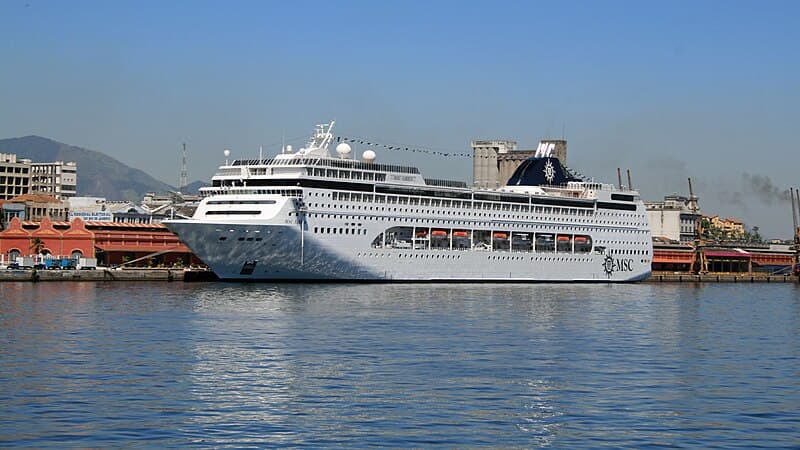
Most people board a cruise ship and see a hotel that happens to float. That is roughly like looking at a space shuttle and seeing a very large airplane.
The truth: a modern mega ship is one of the most complex engineered objects on Earth. A self-governing floating municipality with its own power grid, water supply, legal jurisdiction, law enforcement, and, yes, its own morgue. The brochure covers the waterslides. This post covers everything else.
At CruiseShipTracking.com we track these ships' real-time AIS positions across the world's oceans. When you watch a vessel the size of a small skyscraper carving a course through the North Atlantic at 22 knots, the engineering behind it stops feeling abstract. These 27 facts are what you learn when you pay close attention.
Size: Floating Cities in Every Meaningful Sense
1. The largest ships are the size of a small town. And carry one. Icon of the Seas holds up to roughly 7,600 passengers at maximum capacity, plus a crew of approximately 2,350. That is nearly 10,000 people living, sleeping, and eating on a single vessel. Comparable to the population of many incorporated American towns. For full context on just how large these ships have become, see our largest cruise ships 2026 rankings.
2. Gross tonnage measures volume, not weight. When you read that Icon of the Seas is 248,663 GT, that number has nothing to do with how much the ship weighs. Gross tonnage is a measure of enclosed internal volume. One gross ton equals 100 cubic feet of interior space. The official formula is GT = K1 × V, where K1 is a coefficient derived from the log of the volume. The industry average sits around 120,000 GT. Icon is more than twice that. For a deeper explanation, read our guide to what gross tonnage means on a cruise ship.
3. Cruise ships are classified as "she". For reasons older than the industry itself. The maritime tradition of referring to a ship as feminine traces back to Latin, where the word for ship (navis) is grammatically feminine. Over centuries, the convention deepened into associations of a ship as a protective, nurturing force that shelters those aboard. The tradition holds to this day across every major cruise line. Our cruise ship classes explained guide explores how these vessels are grouped and named.
4. The biggest ships require purpose-built ports. Icon of the Seas is 1,198 feet long. Longer than the Empire State Building is tall. Not every port in the world can accommodate a vessel at that scale. Many Caribbean destinations have had to dredge channels or lengthen berths specifically to welcome the newest generation of mega ships.
The Floating City: Infrastructure You Never Think About
5. Ships make their own fresh water at sea. No cruise ship carries enough fresh water in tanks for a full voyage at that population density. Instead, modern ships use onboard desalination plants that pull seawater, filter it through reverse osmosis or evaporation systems, and produce potable water continuously. A large ship can produce hundreds of thousands of gallons per day. Enough for the entire population onboard including laundry, kitchens, and pools.
6. Ships generate their own electricity. Enough to power a town. A mega ship runs entirely on onboard diesel-electric generators. Multiple generator sets produce electricity that powers everything from propulsion motors to cabin air conditioning to the waterpark pumps. The redundancy is intentional: if one generator set goes offline, others carry the load. There is no extension cord to shore once the gangway is up.
7. The bridge runs 24-hour watches, every day at sea. A cruise ship's bridge is never unmanned while the vessel is underway. Officers work rotating watch schedules, typically four hours on, eight hours off. At any moment, at least one qualified officer is actively monitoring course, speed, traffic, weather, and system alerts. The captain is on call but rarely at the helm. More on that below.
8. Ships have their own jail. Called a brig. Large cruise ships carry a small onboard detention facility, commonly referred to as a brig or "the box." It exists to hold passengers or crew who have committed offenses serious enough to require confinement until the ship reaches port and local or flag-state authorities can take over. It is rarely used, but it is there. Because 10,000 people at sea creates the same law-enforcement math as 10,000 people anywhere else.
Food & Drink: The Numbers Behind Feeding a Town at Sea
9. A large ship burns through roughly 60,000 eggs per week. Symphony of the Seas, a ship carrying approximately 6,600 passengers at full capacity, uses around 60,000 eggs in a single week. Extrapolating to a smaller vessel carrying around 2,500 passengers, the figure drops to roughly 20,000 eggs per week. Multiply across specialty restaurants, buffets, bakeries, and room service, and provisioning a cruise ship starts to look like provisioning a military campaign.
10. Many pools are filled with seawater, not fresh water. Norwegian Cruise Line and Carnival fill their outdoor pools with filtered seawater. Some Royal Caribbean ships use a mixture of salt and fresh water. This is not a cost-cutting measure. It is practical: desalinated fresh water is a resource that competes with drinking and cooking needs. Saltwater pools also carry natural antimicrobial properties that reduce the volume of treatment chemicals required.
11. All that food has to be loaded before every sailing. Everything consumed on a week-long cruise. Thousands of pounds of produce, proteins, dairy, dry goods, beverages, and specialty ingredients for multiple restaurants. Is loaded in port, typically in a compressed window of a few hours during turnaround day. The logistics operation rivals a large hotel preparing for a full week of guests simultaneously.
Engineering: What Makes These Ships Move
12. The captain almost never steers manually. Modern cruise ships rely on integrated bridge systems and autopilot for the vast majority of their underway time. Officers monitor and adjust, but the ship holds its course algorithmically. The captain takes hands-on control during docking, undocking, and situations requiring precise maneuvering. But open-ocean transits are largely managed by software.
13. Azipod propulsion systems let ships dock without tugboats. Many modern cruise ships use rotating pod drives (Azipods, developed by ABB) mounted beneath the hull that can swivel 360 degrees. Because the thrust can be directed in any direction without a conventional rudder or shaft arrangement, a ship equipped with Azipods can rotate nearly in place. This maneuverability eliminates the need for tugboat assistance in many ports. See our full breakdown in cruise ship technology explained.
14. Stabilizer fins the size of aircraft wings suppress roll. Retractable stabilizer fins extend from the hull below the waterline when underway. These act as ailerons in reverse. Angled to generate lift that counteracts the rolling motion induced by waves. On a large ship at sea in moderate conditions, passengers may barely feel the ocean at all. The fins retract when entering port.
15. Ships fly flags of countries they have little connection to. The Bahamas, Panama, and the Marshall Islands are among the most common flag states for cruise ships, despite the ships themselves often being built in European shipyards, owned by American corporations, and crewed by multinational teams. Flying a flag of convenience reduces regulatory costs and tax exposure. The flag state's laws govern the ship's legal obligations at sea, which is one reason maritime law is its own distinct discipline.
16. The propulsion systems of mega ships produce extraordinary horsepower. The diesel-electric plant on a large cruise ship generates power output in the range of 100,000+ horsepower. That is not a misprint. Moving 250,000 gross tons of floating city at cruising speed requires a power plant that dwarfs most industrial applications.
Parts You Never See
17. Every large cruise ship has an onboard morgue. This is perhaps the most quietly practical fact on this list. Cruise ships are required by federal regulation to maintain refrigerated body compartments, typically capable of holding three to six individuals, and to be able to preserve remains for approximately one week until port is reached. Ships carry populations comparable to small towns on voyages that can last days or weeks. Statistical certainty means medical events, including deaths, will occur. The morgue is a standard feature, not an anomaly.
18. Ships carry their own hospital and surgical suite. Beyond the morgue, large cruise ships operate a medical center that includes examination rooms, an intensive care area, and the equipment to perform emergency procedures. A ship's medical staff typically includes licensed physicians and registered nurses. Passengers who require care beyond what is available onboard are stabilized and evacuated by helicopter or diverted to port.
19. The waste treatment systems are regulated like those of small municipalities. Cruise ships cannot discharge untreated waste into the ocean. Onboard marine sanitation systems process and treat sewage to standards that permit discharge only in designated areas under specific conditions. Many lines go beyond the regulatory floor and treat waste to potable-water quality before any discharge. And some retain all waste for shore-side disposal.
20. Ships are built in modules, assembled like enormous Lego sets. Modern cruise ship construction happens in parallel across a shipyard. Large hull sections and interior "cabins" are prefabricated separately and then crane-lifted into the growing hull. This modular approach compresses construction time and allows interior outfitting to happen simultaneously with hull assembly. A mega ship goes from keel-laying to delivery in roughly two to three years.
Safety & Surveillance
21. Man overboard incidents are more common than most passengers know. Approximately 19 people went overboard from cruise ships in 2024, consistent with a long-term average of around 20 per year. Roughly 75 percent of fatalities in these incidents occur at night. Alcohol is identified as a contributing factor in an estimated 60 to 80 percent of cases. The statistic underscores why cruise lines enforce railings at specific heights and why late-night behavior on open decks carries real risk.
22. Overboard detection technology exists. But is not federally mandated. Systems that combine thermal cameras, radar, and AI image recognition to detect a person entering the water in real time cost approximately $200,000 per ship to install. As of the time of writing, only around 30 ships worldwide are equipped with them, and no federal regulation requires the technology. Advocacy groups have pushed for mandates; the industry is moving, but slowly.
23. The bridge has direct visibility requirements baked into design. International maritime regulation specifies minimum sightlines from the bridge. The officer on watch must be able to see the water ahead of the bow without obstruction. On a ship that is 1,200 feet long, that is a significant engineering constraint. It shapes the entire forward architecture of a cruise ship's upper decks.
24. Every guest's location can be tracked aboard the ship. Modern cruise ships issue key cards or wearable devices that log access to cabins, restaurants, and areas throughout the ship. This is primarily convenience and billing infrastructure, but it also means the ship's security team can construct a detailed timeline of any passenger's movements when required. A capability that proves relevant in incidents ranging from theft to medical emergencies to the investigations that follow man-overboard events.
Records & Quirks
25. Ships are registered in one country, operated by companies in another, and built in a third. The international supply chain behind a single cruise ship typically involves a European shipyard (Finland, Germany, France, or Italy most commonly), an American or British holding company as the owning entity, a Caribbean or Pacific island nation as the flag state, and crew drawn from dozens of countries. The ship you board in Miami may have been built in Turku, flagged in Nassau, and crewed largely from the Philippines and Eastern Europe.
26. The distinction between a ship and a boat matters more in maritime law than in casual speech. A common industry shorthand: a boat can be carried on a ship; a ship cannot be carried on a boat. Cruise ships carry lifeboats. Which is part of how they earned the designation. Every passenger ship operating internationally is required to carry sufficient lifeboat capacity for every person aboard, plus a safety margin, distributed on both sides of the vessel.
27. The gross tonnage arms race has no clear ceiling yet. Icon of the Seas' 248,663 GT was a record when she launched in early 2024. Royal Caribbean's next vessels are already in planning, and the shipyards capable of building at this scale, Meyer Turku in Finland and Chantiers de l'Atlantique in France, have the infrastructure to go larger. Where the practical ceiling is, whether constrained by port dimensions, passenger demand, or structural engineering, remains an open question. At CruiseShipTracking.com, we will be watching the AIS data as each new record-holder takes to sea.
Frequently Asked Questions
Do cruise ships really have morgues onboard?
Yes. Large cruise ships are required by federal regulation to maintain refrigerated body compartments, typically three to six, capable of preserving remains for approximately one week. Given that mega ships carry populations equivalent to small towns on multi-day voyages, the statistical likelihood of deaths occurring at sea is a near-certainty over a fleet's operating life. The morgue is a standard, regulated feature of passenger vessel design.
How big is the largest cruise ship in the world?
As of 2026, Icon of the Seas holds the record at 248,663 gross tons, a measurement of internal volume, not weight. The ship is 1,198 feet long, carries up to 7,600 passengers at maximum capacity, and is crewed by approximately 2,350 people. Its sister ship, Star of the Seas, matches the same tonnage figure. See the full largest cruise ships 2026 rankings for the complete list.
Are cruise ship pools salt water or fresh water?
It depends on the ship and the pool. Norwegian Cruise Line and Carnival fill their outdoor pools with filtered seawater. Some Royal Caribbean ships use a blend of salt and fresh water. Indoor pools and thermal suites on most ships use treated fresh water. The seawater pools reduce the demand on onboard desalination systems, which are also supplying drinking and cooking water to thousands of people simultaneously.
Why do cruise ships fly flags from the Bahamas or Panama?
This practice is called flying a flag of convenience. The flag state is the country whose laws govern the ship while at sea. Registering in nations like the Bahamas, Panama, or the Marshall Islands rather than the owner's home country typically reduces regulatory requirements and tax liabilities. It is entirely legal under international maritime law, and the vast majority of the world's commercial fleet, not just cruise ships, operates this way. For more on how cruise ship classes and fleets are organized, see our full guide.
How does a cruise ship make fresh water while at sea?
Modern cruise ships use onboard desalination systems, primarily reverse osmosis or evaporative flash distillation, to convert seawater into potable fresh water continuously while underway. A large ship can produce enough to meet the full daily fresh water needs of its passenger and crew population, from drinking and cooking to showers, laundry, and pool maintenance. This capability is part of what makes week-long deep-ocean voyages possible without resupply stops.
Tracking these ships across the world's oceans gives you a different relationship with the numbers. When you watch a 250,000-gross-ton vessel hold a steady course at 22 knots through open ocean, the engineering behind every one of these facts stops being trivia and starts being obvious.
[Track cruise ships live →](/)