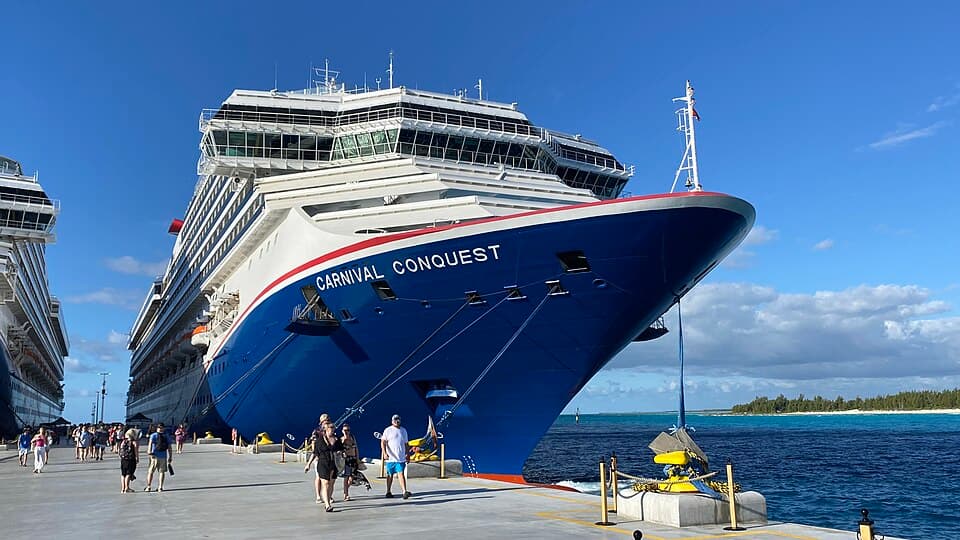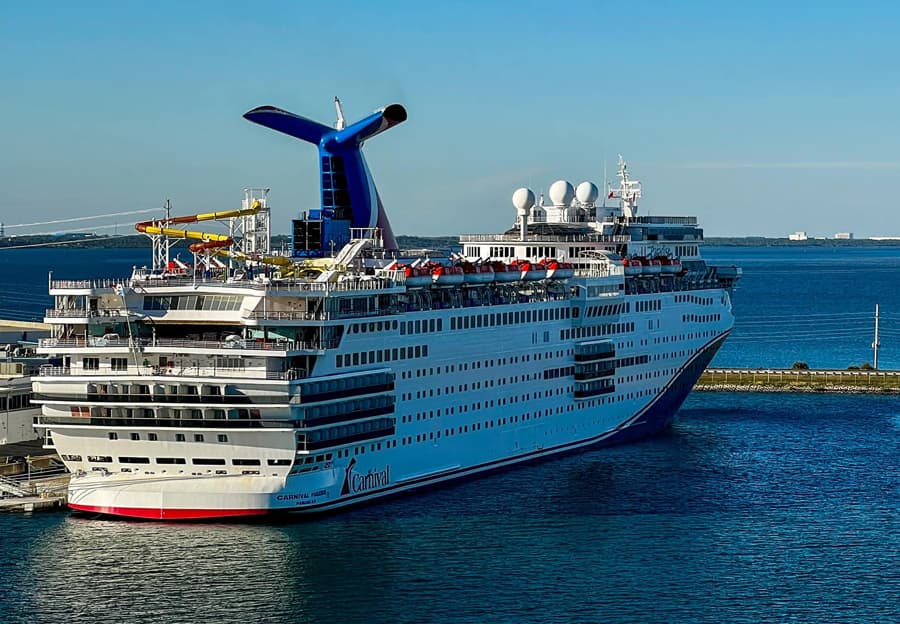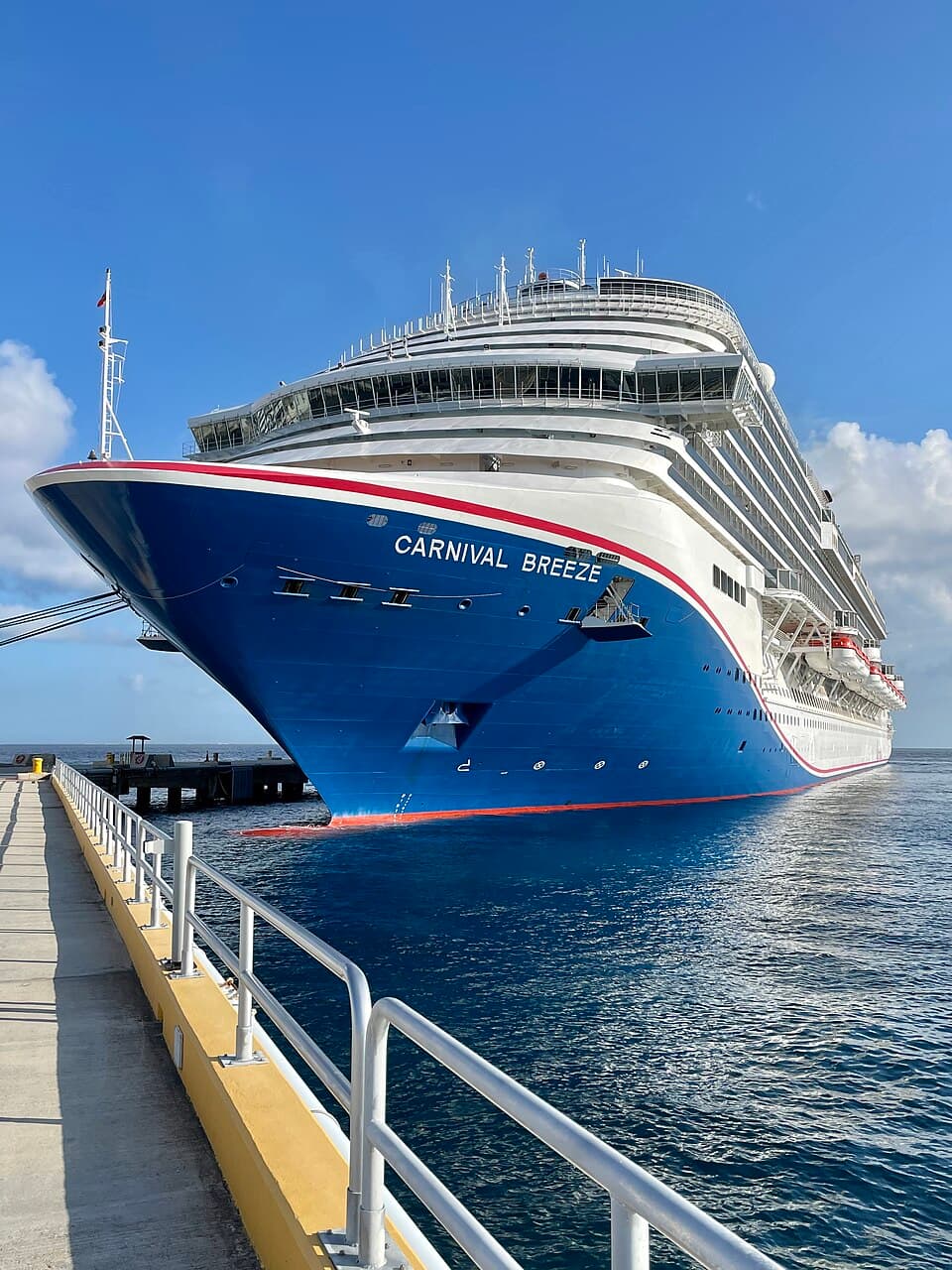
Carnival is the "Fun Ship" line: loud, casual, comedy clubs, waterworks, and a younger average crowd. Princess is the quieter alternative: enrichment programming, a more mature demographic, and a strong presence in Alaska. If you want a party atmosphere and the lowest possible entry price, book Carnival. If you want a calmer ship with more structured onboard activities, book Princess.
Ships and fleet
Carnival runs one of the largest fleets in the industry, split across several classes from older mid-size ships to newer Excel-class megaships. The line is known for bold exterior paint schemes, waterslide towers, and outdoor movie screens, and it leans hard into a casual, high-energy identity across nearly every ship.
Princess operates a smaller, more uniform fleet, historically built around mid-size Royal-class and Grand-class ships, with the newer Sphere-class (Sun Princess and Star Princess) representing the line's biggest ships to date. Princess has a long-standing strength in Alaska, where its ships and its owned rail and lodge network give it more control over the land-and-sea package than most competitors.
Dining
Carnival's dining leans casual: a main dining room, a large buffet (Lido Marketplace), and specialty options like a steakhouse or Italian venue for an upcharge. The line is also known for guest chef partnerships and late-night comfort food options like its signature pizza and deli venues.
Princess dining centers on a traditional main dining room experience alongside its Medallion-driven ordering system, which lets guests order food and drinks from anywhere on the ship using a wearable device. Specialty dining exists but the line puts more emphasis on enrichment-adjacent dining experiences, like chef's table events, than on a long list of themed venues.
Cabins
Carnival's cabin range runs from budget interior rooms up through Havana-themed cabins with access to a quieter adults-leaning pool area, and suites on the newer ships. Prices skew toward the lower end of the industry, which is a major part of the line's appeal.
Princess offers a similarly broad range, with balcony cabins as the most heavily marketed category and suites that include perks tied to the line's loyalty program. The Sphere-class ships introduced new cabin categories with expanded views tied to the ship's distinctive dome structure.
Who it suits
Carnival suits travelers who want a high-energy, party-adjacent atmosphere, families on a budget, groups of friends, and anyone prioritizing price over quiet. Princess suits couples, older travelers, and anyone who wants enrichment programming, naturalist-led talks, and a calmer pace, especially on Alaska or longer itineraries.
Who should skip it
Skip Carnival if you want a quiet, adults-focused trip with minimal noise and crowding, the line's identity runs directly counter to that. Skip Princess if you want nonstop entertainment, waterslides, and a younger, louder crowd, since its programming is built around a more relaxed pace.
Price and value
Carnival is consistently one of the lowest base-fare options in mainstream cruising, and its promotions frequently undercut competitors on short Caribbean and Bahamas sailings. Add-ons like drink packages and Wi-Fi are priced competitively but still add up.
Princess fares sit slightly higher on average, partly reflecting its stronger Alaska and longer-itinerary presence, where land packages and rail add-ons factor into overall trip cost. The Medallion system and Captain's Circle loyalty program add long-term value for repeat cruisers.
Booking and value
Carnival's fare philosophy is built around a low headline price that gets you on the ship, with almost everything past that (specialty dining, drinks, shore excursions, Wi-Fi) sold separately. That structure rewards travelers who plan to spend little beyond the base fare and stay disciplined about add-ons, since the bill can climb quickly for anyone who doesn't. Fare sales and short-notice promotions are frequent, so watching prices over a few weeks before booking often pays off more with Carnival than with lines that hold a steadier rate.
Princess leans slightly more toward bundled fare categories, where a given rate code may already include a drink package, Wi-Fi, or onboard credit, particularly on promotional sailings aimed at Alaska and longer itineraries. That makes comparing two Princess fares side by side more about reading what's actually bundled than assuming the lower number is automatically the better deal. Land-and-sea packages, common on Alaska sailings that pair a cruise with a rail journey or a lodge stay, add a layer of planning that a straightforward Caribbean cruise doesn't require.
Both lines run loyalty programs that reward repeat cruisers with onboard perks, priority boarding, and occasional rate discounts, though neither program meaningfully changes the base decision between the two brands. Where the philosophies really diverge is in how each line wants you to think about the fare: Carnival wants you comparing headline prices, Princess wants you comparing what's included.
Itineraries and home ports
Carnival sails from more North American home ports than almost any competitor, including several drive-to markets that don't see much competition from other big lines, which keeps the line's short Caribbean and Bahamas itineraries easy and cheap to reach for a large share of U.S. travelers. Itinerary lengths run short, three to five nights is common, alongside longer seven-night-plus Caribbean routes, making Carnival a realistic option for a long weekend rather than a full week off work.
Princess sails from a smaller set of home ports but covers a wider range of destinations per itinerary, particularly in Alaska, where the line's Seattle and Vancouver departures anchor a deep seasonal program most competitors can't match in depth. Princess also runs meaningful Panama Canal, Mexican Riviera, and transatlantic itineraries, positioning the line more toward destination-focused cruising than quick getaways.
A traveler comparing the two on itinerary alone should weigh trip length first: Carnival for a short, easy getaway from a nearby port, Princess for a longer, more destination-driven trip, especially anywhere involving Alaska or an extended repositioning route.
The deciding factors
A family on a tight budget with young kids who mainly want a pool, a waterslide, and a low nightly rate should book Carnival, the line is built specifically around that trip. A couple planning an Alaska cruise who wants naturalist talks, a calmer ship, and the option to add a rail journey should book Princess without much debate, given how much deeper the line's Alaska infrastructure runs.
A first-time cruiser testing the waters on a short, cheap sailing before committing to a longer trip is usually better served by Carnival, since the line's short-itinerary inventory and low fares reduce the cost of a first attempt that doesn't go perfectly. A retired couple who cruises several times a year and values structured enrichment programming over pool deck energy will likely get more long-term satisfaction from Princess and its loyalty program.
A group of friends celebrating a birthday or bachelor/bachelorette trip who want nightlife, comedy shows, and a lively pool deck should lean Carnival. A traveler booking a milestone trip, like a big anniversary, who wants a quieter, more polished atmosphere without full luxury-line pricing should lean Princess instead.
Common questions
Which line is better for a first cruise?
Carnival, mainly on price and the sheer number of short, easy-to-book itineraries out of major U.S. ports. Princess is a strong second choice if your first cruise is to Alaska.
Is Princess too quiet for younger travelers?
Not necessarily, but younger travelers looking for a loud, party-forward vibe will likely find Carnival's programming and pool deck energy a better match.
Which line is better for Alaska?
Princess, by a clear margin, given its owned lodges, rail cars, and decades of Alaska-specific itinerary design. Carnival does sail Alaska but with less integrated land-and-sea infrastructure.
Which line has a lower base fare?
Carnival is generally the lower starting price of the two, especially on short Caribbean and Bahamas sailings, though Princess promotional fares can close the gap once bundled perks are factored in.
Does either line have a strong loyalty program?
Yes, both do. Carnival's VIFP Club and Princess's Captain's Circle both reward repeat cruisers with onboard perks and priority services, with Captain's Circle's suite-tier perks often cited as the more noticeable upgrade at higher tiers.
Both lines serve different moods more than different budgets. Check current cruise deals for both, then compare sailings and prices to see which itineraries line up with your travel window. Once booked, track any cruise ship live to watch your ship's route in real time. For a deeper look at either brand, see our Carnival Cruise Line review or Princess Cruises review.