Most people think of a cruise as seven nights in the Caribbean. A world cruise is something else entirely. Closer to relocating your life onto a ship and watching the planet unspool outside your cabin window for three to six months.
It is the most ambitious version of cruising there is. And it is more accessible than most people assume.
The Direct Answer: How Long and How Much
A full world cruise typically runs 90 to 180 days and costs anywhere from $20,000 to well into the hundreds of thousands of dollars per person, depending on the line and the cabin.
To be precise about the ranges:
Oceania runs a flagship 180-day around-the-world voyage. Inside cabins start around $40,000 per person.
Cunard's Grand World Voyage (aboard Queen Mary 2 or Queen Victoria) runs roughly 100–120 days, starting around $24,000 per person.
Princess Cruises offers its longest world-style itinerary at 129 days, with fares beginning around $20,000 per person.
Premium suites on any of these ships, the full-service butler accommodations, run into the hundreds of thousands. Some passengers pay more for six months at sea than they would for a second home.
Those are the numbers. Now here is the piece most people miss: you do not have to book the whole voyage. Almost every world cruise sells segments, typically two to six weeks at a stretch, on the same ship, following the same route. It is the most popular way to experience a world cruise without rearranging your entire life. You board in Cape Town, sail through the Indian Ocean, and disembark in Singapore. The ship keeps going. You go home.
Which Lines Run World Cruises
Not every cruise line attempts a circumnavigation. The ones that do it consistently, and do it well:
Oceania Cruises. The 180-day Around the World voyage is one of the longest offerings from any mainstream line
Cunard. The Grand World Voyage aboard Queen Mary 2 and Queen Victoria, with the formality and tradition the brand is known for
Princess Cruises. The World Cruise (currently 129 days) with a loyal repeat following
Holland America Line. Grand World Voyage departures with multi-generational appeal
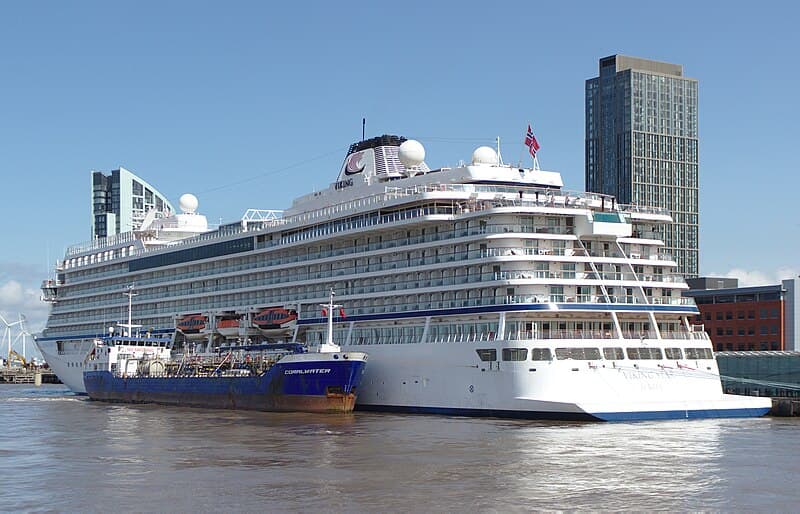
Viking. Newer to world cruising but growing fast, with a design-forward product
Seabourn, Silversea, Regent Seven Seas. Ultra-luxury options where the all-inclusive model changes the cost conversation significantly
Viking. Worth a separate note: their world cruises sell out early and carry a particularly loyal following among first-time world cruisers
Most world cruises depart January or February, leaving from Miami, Fort Lauderdale, Los Angeles, or Southampton. The timing is deliberate. It chases Southern Hemisphere summer for the South Pacific and South America legs.
What the Itinerary Actually Looks Like
A full circumnavigation will typically visit 100 or more ports across every inhabited continent. You will cross the International Date Line, transit the Panama or Suez Canal (often both), and call on UNESCO World Heritage sites that most travelers spend their whole lives hoping to reach: Angkor Wat, the Galápagos, the Norwegian fjords, Petra, the Bay of Kotor.
The routing varies by line and year. What stays consistent:
A Caribbean or South American segment to open
A Pacific crossing with Polynesian and Australasian ports
Southeast Asia. Vietnam, Thailand, Singapore
Indian Ocean: Sri Lanka, Oman, potentially the Maldives
East Africa or the Suez Canal
Mediterranean
Northern Europe or a transatlantic return
If you want a sense of what these routes look like in practice, and where any specific ship is right now along its voyage, you can track world cruise ships in real time on our AIS tracking pages. The vessel's live position, course, and speed update as it crosses each ocean basin.
The Money Beyond the Fare
The headline fare is where the comparison starts, not where it ends. What that figure usually does and does not include varies enormously by line.
Typically included in the fare:
Your cabin for the duration
Main dining and most buffet meals
Entertainment, lectures, enrichment programs
Port taxes and fees (usually. Verify this at booking)
What is typically extra:
Specialty restaurants (a real cost over five-plus months)
Beverages (unless you are on an ultra-luxury all-inclusive line)
Shore excursions. Which at 100+ ports can accumulate faster than the airfare cost of a conventional vacation
Gratuities (some lines bundle these; others do not)
Laundry
On a 180-day voyage, even a modest daily spend on excursions and extras adds up. Budget-conscious world cruisers book independent tours in port rather than ship-organized excursions, pack smarter, and research which specialty restaurants are worth the supplement before they sail.
What Life Actually Looks Like After Month One
This is the part brochures tend to leave out.
Sea days are a significant part of the experience. On a full circumnavigation, you may spend 50, 60, or more days at sea between ports. For some passengers, this is the appeal. The lectures, the library, the unhurried pace of ocean crossing. For others, it becomes monotonous around week six. Know which type you are before you commit to 180 days.
A community forms. Full-voyage passengers occupy a distinct social tier on the ship. You will know the same 200 to 500 people for months. This creates genuine friendships. World cruise regulars describe their fellow passengers as the most lasting part of the experience. It also means that if you clash with someone, there is nowhere to go. The ship is a small town.
Formal nights recur throughout the voyage. Cunard in particular maintains its tradition of black-tie and formal optional evenings. If you are on a 120-day Cunard voyage, pack accordingly. Multiple times. A packable garment bag that compresses flat is not a luxury at this trip length; it is logistics.
Storage is finite. A cruise ship cabin has less closet space than a studio apartment. Packing for six months into that space requires discipline. A luggage scale becomes essential for managing the weight of what you bring versus what you acquire along the way (and you will acquire things. 100+ ports means 100+ temptations). World cruise veterans recommend shipping items home periodically rather than letting the cabin fill up.

Aerotrunk Compression Packing Cubes 4-Pack
- Double-zipper compression cuts volume by up to 60%
- Four sizes cover every clothing type
Compression cubes are the single best way to fit a week of cruise outfits into a carry-on
View on AmazonA Kindle or e-reader is not optional for sea days. Hauling physical books across a circumnavigation is unrealistic; the ship library is finite. Veteran world cruisers load up with hundreds of titles before departure.
Noise-canceling headphones matter more than people expect across fifty-plus sea days. For sleep, for concentration during lectures, for the long overnight flights getting to and from embarkation ports.
Power planning matters. Cabins on most ships have limited outlets, often with European sockets. A non-surge power strip (cruise lines prohibit surge protectors due to fire risk) is the practical solution. Most world cruise veterans consider it essential kit.
A small travel lock or portable safe gets real use when you are in and out of ports across six continents. Shore excursion crowds, markets, and transit hubs are environments where document security matters.
Before You Sail: The Onshore Checklist
A world cruise requires you to put your land life in storage, not just your belongings.
Mail. Set up a mail forwarding service or designate someone to collect and scan.
Bills and banking. Notify your bank of the countries you will visit. Automate every recurring payment. Consider a travel-optimized credit card.
Pets. Long-term boarding or a trusted sitter. This needs to be arranged months in advance.
Medical. Get every prescription filled for the full duration. Confirm your health insurance covers international travel and medical evacuation. Some world cruise lines offer supplemental coverage.
Voting, taxes, and subscriptions. The world cruise departs in January or February. Close to tax season. Either file early or grant a power of attorney.
The passengers who struggle with world cruises are not the ones who tire of the sea. They are the ones who did not adequately plan the life they left behind.
The "Living on a Ship" Trend
There is a growing contingent of people who have essentially stopped maintaining a land residence and treat long voyages, including world cruises and back-to-back sailings, as a permanent lifestyle. It is a real trend, not a myth. The economics can be more competitive than they appear when you factor out rent, utilities, car ownership, and dining costs. This is a lifestyle choice, not a standard use case, but world cruise lines are increasingly aware of it and some have begun catering to long-stay passengers explicitly.
If this interests you, the repositioning cruise guide and our solo cruising guide are relevant reading. Repositioning sailings and solo bookings are how many long-stay cruisers fill the gaps between world voyages.
Further Reading
If you are researching world cruises, these guides are useful companions:
How much does a cruise cost?. Context for where world cruise fares sit relative to mainstream cruising
Transatlantic cruise guide. A good entry point if a full circumnavigation feels like too large a commitment
Panama Canal cruise guide. The Canal transit is a centerpiece of most world cruise itineraries
Cruise laundry tips. A topic that is trivial on a 7-night sailing and genuinely important over six months
Frequently Asked Questions
How long is a world cruise?
Most full world cruises run between 90 and 180 days. Oceania's around-the-world voyage is 180 days. Cunard's Grand World Voyage is roughly 100–120 days. Princess's longest world-style itinerary is currently 129 days. Shorter "world cruise" offerings from other lines can come in under 90 days but typically cover fewer regions.
How much does a world cruise cost?
Fares range widely. Starting prices for inside cabins begin around $20,000 per person (Princess, 129 days) to $40,000 per person (Oceania, 180 days). Cunard's Grand World Voyage starts around $24,000 per person. Premium suites on any line run into the hundreds of thousands. These are baseline fares. Beverages, excursions, specialty dining, and gratuities add to the total.
Do you have to book the whole world cruise?
No. Most world cruises sell segments. Typically two to six weeks, allowing you to join and leave the ship at specific ports along the route. This is how many passengers experience a world cruise without committing to six months at sea.
Which cruise line has the best world cruise?
There is no universal answer; the right line depends on your style. Cunard delivers the most formal, traditional experience. Oceania leans toward culinary focus and longer duration. Viking attracts passengers who want enrichment and destination immersion. Ultra-luxury lines (Seabourn, Silversea, Regent) include virtually everything in the fare and attract a different value calculation. Research each line's specific itinerary for the year you plan to sail.
When do world cruises depart?
Most depart in January or February from Miami, Fort Lauderdale, Los Angeles, or Southampton. The northern winter departure allows the ship to reach the Southern Hemisphere during its summer months and return to Europe in time for a Mediterranean season.