Norway puts geology on display in a way that no landscape photograph fully prepares you for. The fjords. Carved by glaciers over millions of years and now reflecting cliffs that drop hundreds of metres straight into dark water. Are one of those places where the real thing corrects your expectations upward. A cruise is the right way to see them: you move through the fjords at water level, where the scale registers properly, without the logistical friction of driving winding mountain roads between each inlet.
This guide covers the top fjords, when to go and why timing matters more than you might expect, how ship size shapes what you can reach, and what to book before the ship does it for you.
The Best Time to Cruise the Norwegian Fjords
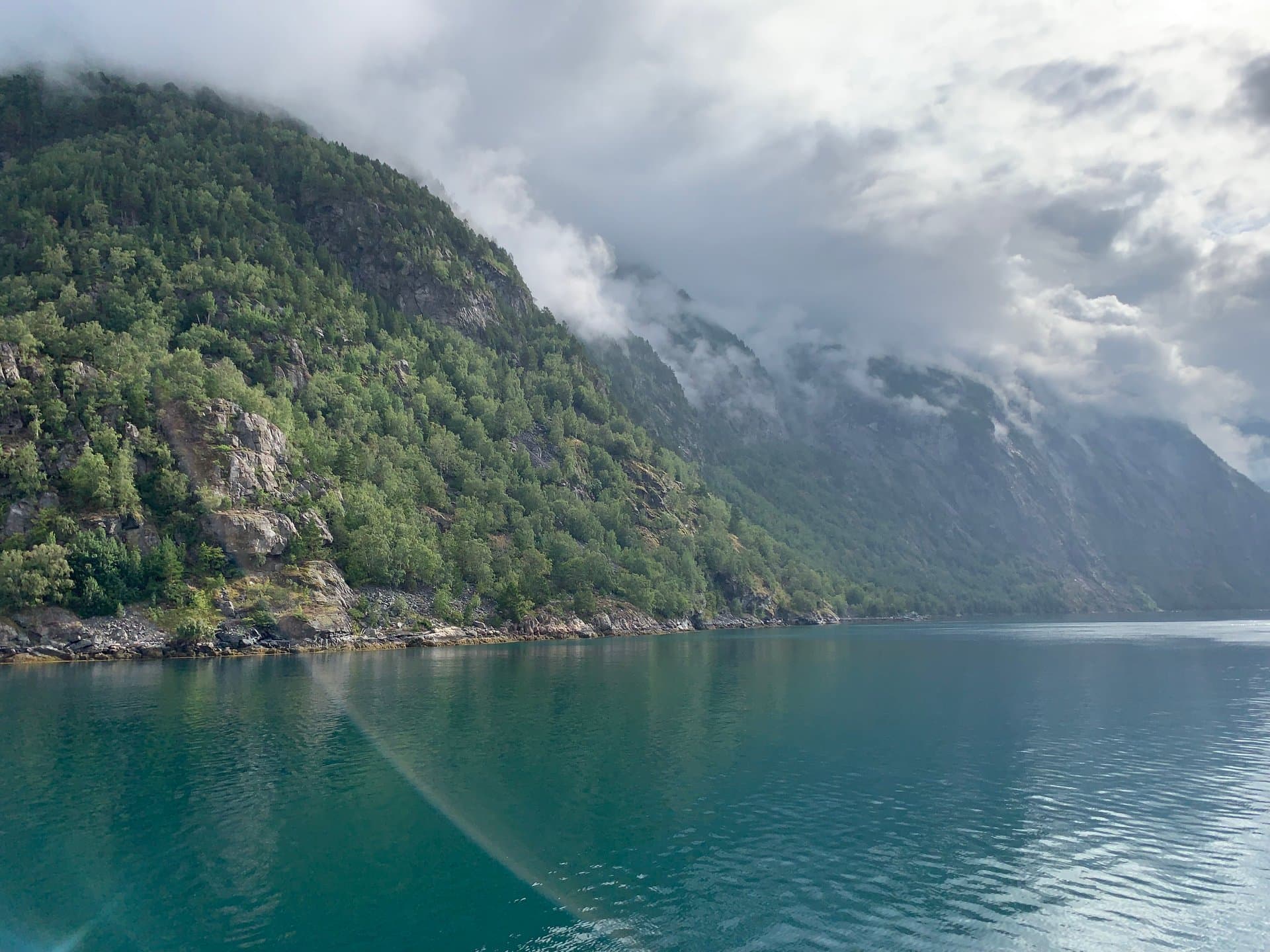
Go late May through August. That is the direct answer, and within it, the month you choose changes what you experience.
Late May is the waterfall season. Snowmelt from the surrounding mountains sends water over the cliffs in volumes you will not see any other time of year. The Seven Sisters waterfall at Geirangerfjord, which splits into multiple cascades as it drops, is at its most powerful in late May and early June. Crowds are still manageable, and fares sit below peak rates.
June through August is high season, and the defining feature is light. The Midnight Sun gives you 19 or more hours of usable daylight, which means you can stand on deck at 11pm watching the water turn gold while the cliffs stay lit. That is not a small thing. It rewrites how you experience the ship, the ports, and the sailing itself.
The peak of peak, July, brings the most sailings, the warmest days, and the most ships in any given fjord on any given morning. Prices climb accordingly. Book 9 to 12 months ahead if you want July; availability compresses faster than on most other European itineraries.
Shoulder season (late May or September) trades crowd density and some daylight for meaningfully lower fares and a quieter arrival in port. Temperatures in the shoulder months run roughly 2–12°C. Cool but entirely manageable with the right layers.
Winter fjord cruises exist but are a different product entirely. Hurtigruten operates year-round, and winter sailings target the Northern Lights. That trip belongs in its own planning framework.
The Top Norwegian Fjords
Not all fjords are equal, and most cruise itineraries combine two or three rather than sailing a single inlet repeatedly.
Geirangerfjord is the one you have seen on travel magazine covers. Roughly 15 kilometres long, edged by sheer cliffs, and punctuated by waterfalls including the famous Seven Sisters cascade. A series of seven separate falls dropping from a single plateau. UNESCO World Heritage status, which it shares with Nærøyfjord, reflects the fjord's exceptional natural significance. Ships anchor in the village of Geiranger and tender passengers ashore. Because of its UNESCO designation, the largest cruise ships face restrictions here; smaller and mid-size vessels operate with more freedom.
On busy summer days, multiple ships transit Geirangerfjord within the same morning. Cruiseshiptracking.com tracks vessel movements via AIS signal, so you can see the ship traffic for yourself before your sailing. A useful reference for gauging how busy a port day is likely to feel.
Nærøyfjord holds the other half of the same UNESCO inscription, and by most measures it is the more dramatic of the two by pure geography. At its narrowest point it measures roughly 250 metres across. The walls on each side rise almost vertically and seem to lean inward. Sailing through it in calm water is quietly overwhelming. Large ships cannot enter.
Sognefjord is Norway's longest and deepest fjord. Over 200 kilometres of water stretching inland from the coast, reaching depths of more than 1,300 metres. Its scale is different from Geirangerfjord's drama; it takes time to fully register. The Flåm arm of Sognefjord is where most cruise passengers experience it, arriving at the village of Flåm from Bergen or directly by ship.
Hardangerfjord and Lysefjord round out the list. Hardangerfjord is known for its apple orchards and calmer scenery, a counterpoint to the vertical drama elsewhere. Lysefjord is the access point for Pulpit Rock, Preikestolen, a flat granite ledge jutting 604 metres above the water that has become one of Norway's signature images.
Ship Size: The Decision That Shapes Your Itinerary
This is the thing most cruisers do not consider until after they book. Ship size directly determines which fjords you reach.
The UNESCO fjords, Geirangerfjord and Nærøyfjord in particular, restrict or limit the largest cruise vessels. A megaship that carries 5,000 passengers may call at Bergen and Stavanger but will not sail into the narrowest inlets. A small expedition ship or a mid-size vessel can anchor in Geiranger, tender into Flåm, and navigate the narrowest passages.
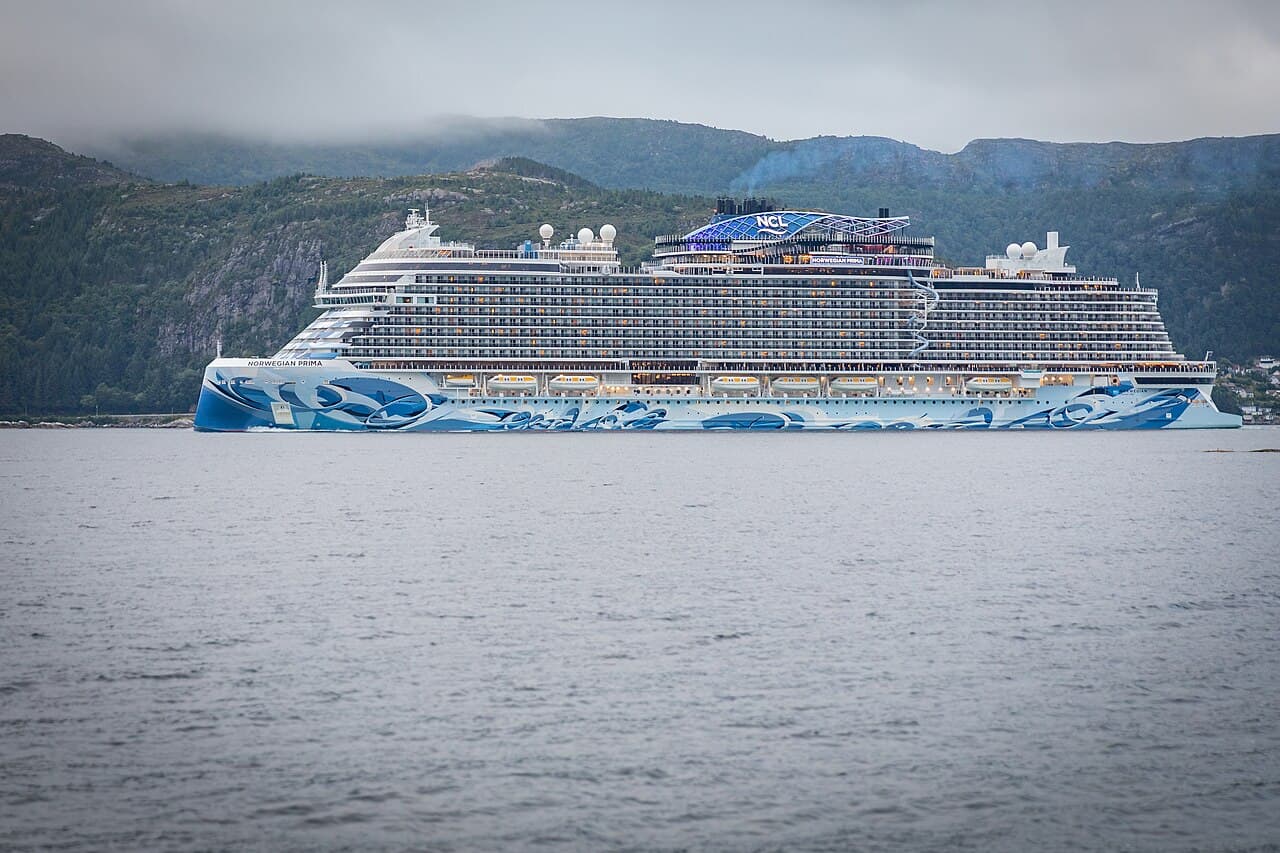
If seeing Nærøyfjord and Geirangerfjord from the water is your priority, not just visiting Norway, filter your search by ship size before you filter by price or brand. Lines like Hurtigruten specialize in smaller vessels designed for exactly this geography. Larger mainstream lines (Royal Caribbean, Norwegian Cruise Line, MSC, Princess, Cunard, Viking) offer fjord itineraries that range widely in what they actually enter.
For a broader comparison of expedition-style and traditional ocean cruising, river cruise vs. ocean cruise covers how scale and intimacy trade off.
Key Ports and What to Do in Each
Flåm is the single most important port in any Norwegian fjords itinerary. It sits at the end of the Aurlandsfjord arm of Sognefjord, surrounded by snowcapped peaks, and it is where the Flåm Railway departs. The railway climbs through some of the steepest mountain rail terrain in Europe, a gradient that required two decades to engineer, past waterfalls and through tunnels cut directly into the rock face. It sells out first. Book it the moment excursion reservations open. Independent booking is cheaper than the ship's offering; the risk is purely logistical if timing runs tight.
A good pair of compact binoculars makes the train journey noticeably richer. You will want to follow the waterfalls from a distance before the train pulls alongside them.
Bergen is the gateway city. Most fjord cruises begin or end here. The Bryggen wharf, a row of medieval timber warehouses along the harbor, is Bergen's UNESCO-listed calling card, and it earns it. Bergen is also rainy. The city averages around 230 days of rain per year. This is not discouraging information; it is packing information.
Ålesund is the unexpected standout for architecture travelers. The entire city centre was destroyed by fire in 1904 and rebuilt in four years in Art Nouveau style. Towers, ornamental facades, and consistent visual language across a compact island centre. Arriving by sea makes the skyline read properly.
Stavanger is the starting point for Lysefjord and Pulpit Rock. The hike to Preikestolen is a serious undertaking, four kilometres each way with significant elevation gain, and most cruise port times are too short to allow it by foot. Guided excursions by boat (viewing from the water) or helicopter are the practical alternatives from a port call.
Olden and the Nordfjord area gives access to the Briksdalsbreen glacier arm, one of the more accessible glacier tongues in Norway and a compelling half-day excursion that most passengers do not realize is an option until they are already in port and watching the tour buses fill up.
What to Pack for a Norwegian Fjords Cruise
Norway in summer is temperate, sometimes warm, and reliably damp. The combination of rain-shadow valleys, open water, and mountain microclimates means conditions can shift within a single port call. The standard advice, layers and rain gear, is not a travel cliché here; it is an accurate description of what the weather actually requires.
A packable waterproof rain jacket earns its place in your bag every single day. Not a decorative shell, but something with sealed seams and a hood that stays put in wind. Merino base layers handle the temperature variance better than cotton and pack small enough to bring two or three without bulk.
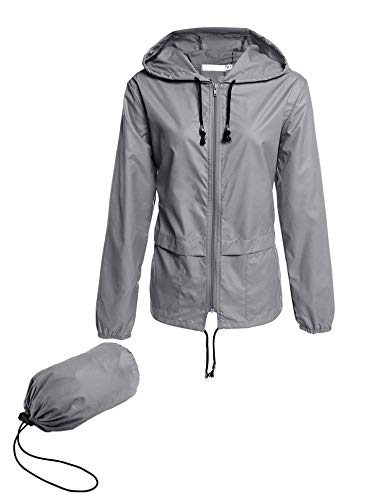
Women's Packable Rain Jacket
- Packs into its own pocket
- Waterproof and windproof for unexpected Caribbean showers and Alaska drizzle
Tropical showers come fast and hard, a packable jacket saves your excursion outfit
View on AmazonIf photography is part of why you're going, and the fjords are a serious photographic environment, bring a polarizing lens filter. It cuts the surface glare off the water and deepens the saturation of the cliffs and sky in ways that post-processing cannot fully replicate. A compact travel tripod becomes relevant during Midnight Sun hours when you want long exposures of still water at 10pm without introducing camera shake. More on shooting the fjords in our cruise photography tips guide.
A dry bag is worth packing if you plan to kayak, take water taxis, or simply stand on a tender in the rain with a camera. Electronics and fjord spray do not coexist well without one.
For the full packing framework see what to pack for a cruise, which covers the base layer regardless of destination.
Cruise Lines That Sail the Norwegian Fjords
Several major lines operate Norwegian fjords itineraries, and they occupy different positions on the size and experience spectrum.
Hurtigruten is the Norwegian specialist and the only major line with year-round coastal service. Their ships are smaller, the culture is expedition-oriented, and the itineraries go deeper into the fjord system than what mainstream lines can physically access. If reaching Nærøyfjord by sea in a vessel that fits the fjord is the goal, Hurtigruten is the starting point.
Viking offers fjords sailings on smaller ocean ships with a culturally oriented itinerary design. Focus on ports, shore experiences, and regional context rather than onboard entertainment.
Royal Caribbean, Norwegian Cruise Line, MSC, Princess, and Cunard all include Norwegian fjords on their European seasonal programmes. These ships tend to be larger; itineraries typically include Bergen and Flåm but may substitute scenic cruising near the fjords for actually entering the narrower passages. The onboard experience is more resort-oriented, which suits many travelers.
If you are combining the fjords with wider European travel, see how to book flights for a European cruise. Bergen and Oslo are both well-connected, and the one-way flight question comes up on most Scandinavian itineraries.
Booking: What to Do First
For peak June and July sailings, book 9 to 12 months in advance. This is not a general travel truism. Norwegian fjords itineraries in peak summer genuinely compress. The combination of limited small-ship capacity, high demand, and UNESCO-site port restrictions creates a tighter supply picture than comparable Mediterranean sailings.
When you book, prioritize:
The Flåm Railway. First excursion to reserve, before everything else
Ship size confirmation. Verify whether your specific ship enters Geirangerfjord and Nærøyfjord or cruises nearby
Balcony cabin. The fjord scenery is the product; watching it from a private deck at midnight is categorically different from a public promenade
For comparison with other European cruise destinations before you commit, the Mediterranean cruise guide covers the southern European alternative in the same level of detail.
Frequently Asked Questions
What is the best time of year to cruise the Norwegian fjords? Late May through August. Late May has peak waterfall flow as snowmelt cascades off the cliffs. The Seven Sisters waterfall at Geirangerfjord is at its most dramatic. June through August brings the Midnight Sun (19+ hours of daylight), the most sailings, and the warmest temperatures, though prices and crowds peak in July. Shoulder season (late May and September) gives you fewer ships in port and noticeably lower fares, with the tradeoff of cooler temperatures, roughly 2–12°C.
Can large cruise ships sail into the Norwegian fjords? Not all of them. Large ships are restricted from the narrowest and most dramatic fjords. UNESCO World Heritage sites like Geirangerfjord and Nærøyfjord actively limit or restrict the biggest vessels. Small and mid-size ships reach more places and give you a closer, quieter experience. If seeing the most dramatic fjord scenery is your priority, the ship size decision matters as much as the itinerary.
Which Norwegian fjord is the most impressive? That depends on what impresses you. Geirangerfjord is the iconic postcard: dramatic cliffs, the Seven Sisters waterfall, and UNESCO status. Nærøyfjord is arguably more dramatic by geography: it narrows to roughly 250 metres and the walls feel almost vertical. Sognefjord is Norway's longest and deepest, with a scale that takes time to fully register. Most cruise itineraries combine two or three, so you rarely have to choose just one.
What excursion should I book first in Flåm? The Flåm Railway. It is the single most popular excursion in any Norwegian fjords itinerary and it sells out first, sometimes weeks before the sailing. The railway climbs through some of the steepest mountain terrain in Europe, with waterfalls visible through the windows on the ascent. Book it the moment bookings open, regardless of what else you plan to do in port.
Do Norwegian fjords cruises operate in winter? Some do, Hurtigruten operates year-round along the Norwegian coast and winter sailings are a distinct product built around Northern Lights viewing. The fjords are quieter, the light is low, and the experience is genuinely different from summer. If the Aurora Borealis is the draw rather than waterfalls and Midnight Sun, winter Hurtigruten sailings are worth researching as a separate trip.

Compact Waterproof Binoculars (10x25)
- 10x magnification with 25mm objective lens for crisp detail
- Compact folding design fits in a jacket pocket