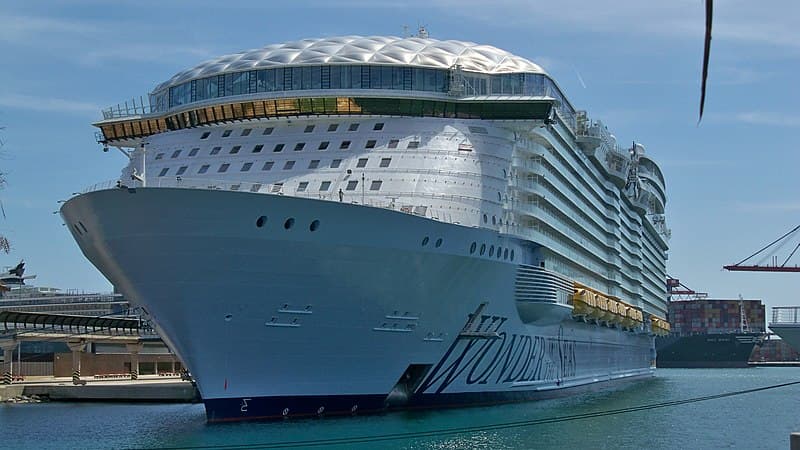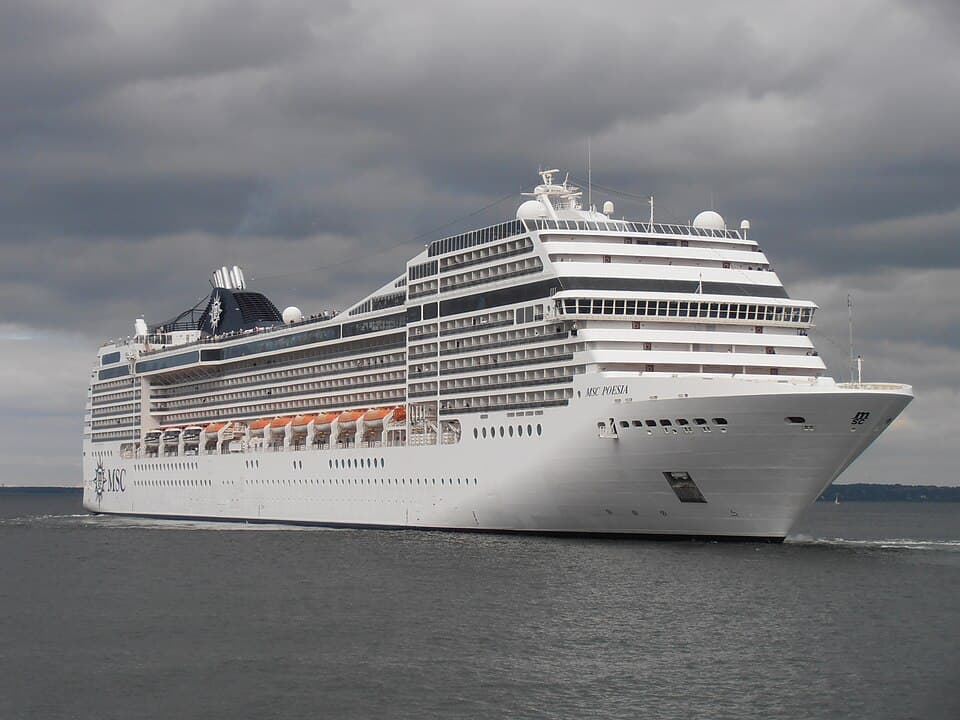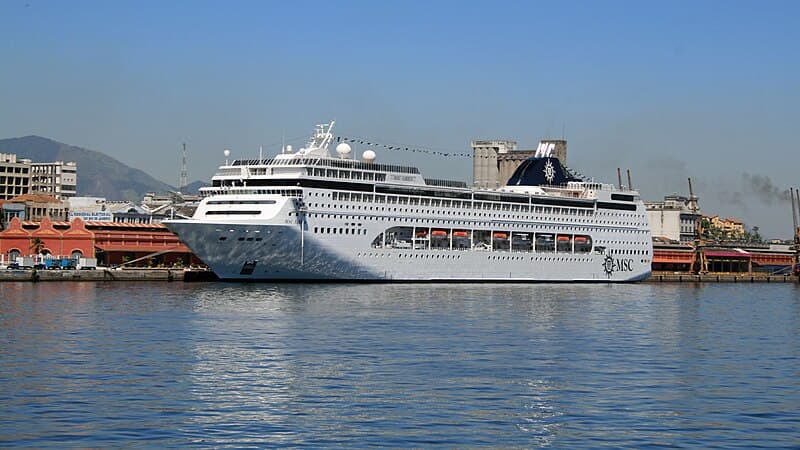

You are 1,200 miles from the nearest coastline. The ship flies a Bahamian flag, was built in Italy, is owned by an American corporation, and is carrying passengers from forty countries. Someone commits a crime. There is no local police department. No sheriff. No 911. So who, exactly, has the authority to investigate, arrest, and prosecute?
It is one of the most common questions cruise travelers ask, and the answer is more orderly than the open ocean makes it feel.
A cruise ship is never a lawless zone. The country whose flag the ship flies, its "flag state", holds primary jurisdiction over crimes committed onboard, no matter where the ship is. But when the voyage touches the United States, a U.S. port, a U.S.-citizen victim, or a U.S.-owned vessel, the FBI can assert jurisdiction too, and federal law (the Cruise Vessel Security and Safety Act of 2010) forces the cruise line to report serious crimes to the Bureau. The "middle of the ocean" is not a legal vacuum. It is a layered system, and understanding the layers tells you exactly who answers when something goes wrong.
The Law of the Sea: A Quick Map of the Water
Maritime jurisdiction is built on the United Nations Convention on the Law of the Sea (UNCLOS), which divides the ocean into zones measured from a country's coastline. Where the ship is sitting at the moment of an incident matters, because different zones grant different levels of control to the nearby coastal nation.
Territorial sea (0–12 nautical miles): A coastal state has full sovereignty here. Its laws, and its police, apply, subject only to a foreign ship's right of "innocent passage" while transiting through.
Contiguous zone (12–24 nautical miles): The coastal state can enforce a narrow set of rules: customs, immigration, sanitation, and fiscal laws. It is not full sovereignty.
Exclusive economic zone (12–200 nautical miles): Mostly about resources, fishing, drilling, seabed rights, not general criminal law over a passing cruise ship.
The high seas (beyond 200 nautical miles): No single nation's general laws apply to the water itself. This is the "middle of the ocean" people imagine.
So if you are dreaming of a Caribbean crossing far from any island, you are likely on the high seas. And on the high seas, jurisdiction does not disappear. It shifts to the flag.
Flag State Jurisdiction: Why Your Ship Is "From" the Bahamas
Under UNCLOS, a ship on the high seas remains under the jurisdiction of the country whose flag it flies. The flag state is responsible for inspecting the vessel, certifying its equipment and crew, and, critically, exercising legal authority over what happens aboard. In a real sense, the deck of a Bahamian-flagged ship is treated as a piece of the Bahamas, wherever in the world it floats.
This is why the registry of most cruise ships seems strangely disconnected from where the cruise line is headquartered. The Bahamas is the number-one cruise ship registry on Earth, roughly half the world's cruise fleet flies its flag, and Panama is the largest ship registry overall, with Liberia close behind. Major lines including Carnival, Royal Caribbean, and Disney register in the Bahamas rather than the United States.
These are known as flags of convenience. Owners choose them deliberately. A foreign registry can mean lower fees, lighter taxes, and, bluntly, different labor rules. As maritime observers point out, a "Bahamian" ship is not bound by U.S. labor law the way a U.S.-flagged vessel would be. The flag is a business decision as much as a legal one, and it sets the default answer to "whose law applies?" before any other factor enters the picture.
It also means the flag state is the baseline authority for crime. At least in theory. In practice, when Americans are aboard, a far more familiar agency steps in.
When the FBI Has Jurisdiction
For most cruises sailing from U.S. ports, the answer to "who investigates?" is, in practice, the FBI. Even on the high seas, even on a foreign-flagged ship.
The reach comes from federal law. Under 18 U.S.C. § 7, the "special maritime and territorial jurisdiction of the United States" extends to the high seas and to U.S.-owned or U.S.-registered vessels, and a 2001 amendment extended it to crimes committed by or against a U.S. national in places outside any nation's jurisdiction. Serious offenses, murder, manslaughter, kidnapping, rape, assault, robbery, fall squarely within it.
The FBI itself describes the factors that decide its role: the location of the vessel, the nationality of the suspect or victim, who owns the ship, the points of embarkation and debarkation, and the country of registration. In other words, multiple threads can pull a case into U.S. jurisdiction. An American victim, an American perpetrator, a U.S.-owned ship, or a voyage that began or ends at a U.S. port. The Bureau coordinates with the U.S. Attorney's Office to confirm jurisdiction and, when it has it, will typically board the vessel when it docks.
Jurisdiction can also be concurrent. The flag state, the coastal state (if the ship was in someone's territorial waters), and the United States may all have a legitimate claim. And which one actually prosecutes is often a practical question of who has custody, evidence, and the will to act.
The Cruise Vessel Security and Safety Act of 2010
The single most important law for an American cruise passenger is the Cruise Vessel Security and Safety Act (CVSSA) of 2010 (Public Law 111-207). It applies to most cruise ships that embark or disembark passengers in the United States, even foreign-flagged ones, and it converted the question of crime reporting from a courtesy into a federal requirement.
The CVSSA requires a vessel operator to contact the nearest FBI field office (or legal attaché) as soon as possible after a crime, and to file an online report in a government-designated portal. The crimes that must be reported are specifically enumerated:
Homicide
Suspicious death
A missing U.S. national
Kidnapping
Assault with serious bodily injury
Sexual assault
Firing at or tampering with the vessel
Theft of money or property exceeding $10,000
The Act also mandated physical safety standards. Higher rails, peepholes and security latches on cabin doors, man-overboard detection technology where practicable, and trained sexual-assault response personnel and equipment aboard. The U.S. Department of Transportation publishes the resulting incident data quarterly on its public website, so travelers can see reported crime by cruise line. (For more on the safety-engineering side of this law, see our cruise ship safety guide.)
Ship Security and the Brig
Long before the FBI boards at the dock, the ship's own security team is the first responder. Every large cruise ship carries a Chief Security Officer and a security staff trained to lock down a scene, separate parties, preserve evidence, and, yes, detain a suspect.
Most cruise ships do have a holding cell, commonly called the brig, where a person who poses a danger can be confined until the ship reaches port and authorities take over. The captain's authority to maintain order and safety aboard is long-established in maritime tradition and law; a master can confine someone whose conduct threatens the vessel or its passengers. What the ship's crew cannot do is conduct a criminal prosecution. Their job is containment and preservation until a law-enforcement agency with jurisdiction assumes the case.
This is also where serious onboard sanctions begin. Passengers who commit crimes or endanger others are frequently put off at the next port and banned from the cruise line for life. A separate, contractual consequence that does not depend on a criminal conviction.
How a Cruise Ship's Track Can Settle the Jurisdiction Question
Here is the detail that most explainers miss: jurisdiction frequently hinges on exactly where the ship was at the moment of an incident. Twelve nautical miles is the line between a coastal nation's full sovereignty and the looser zones beyond. A few miles can be the difference between a country's police having direct authority and the case defaulting to the flag state or the FBI.
This is precisely the kind of fact that vessel-tracking data can establish. Cruise ships continuously broadcast their position over AIS (Automatic Identification System), and at cruiseshiptracking.com we retain historical AIS tracks. That history can pin a ship to a specific latitude and longitude at a specific time. Which lets investigators, attorneys, or simply a curious passenger reconstruct whether the ship was inside a nation's 12-mile territorial sea or out on the high seas when something happened. In a jurisdictional dispute, that geographic record is not trivia; it can be the deciding evidence.
What to Do If a Crime Happens Onboard
If you are the victim of or witness to a crime at sea, the practical steps are straightforward. And acting fast matters, because evidence at sea is perishable.
Get to safety and seek medical care. Onboard medical staff can treat injuries and, in a sexual-assault case, perform an examination that preserves evidence.
Report to ship security immediately. Insist that the Chief Security Officer be involved and that an incident report be created.
Preserve everything. Do not clean up, change clothes, or delete anything. Photograph injuries and the scene; note times and locations.
Demand the FBI be notified. For U.S.-connected voyages, the CVSSA requires the cruise line to contact the FBI for the enumerated crimes. You can also contact the FBI yourself once ashore.
Write down the ship's position and time. Knowing where the vessel was anchors the jurisdiction question. And an AIS history can corroborate it later.
Keep your own records. Get names, cabin numbers, and copies of any report the ship generates, and consider consulting a maritime attorney.
The Honest Caveat on the Numbers
Cruise crime is genuinely rare. Industry analysis submitted to regulators found violent crime rates roughly 95% lower at sea than on land, and one estimate put a passenger's odds of being a victim at about 1 in 88,000 over a recent twelve-month stretch. Sexual assault, the most frequently reported category, also ran far lower per capita at sea than on shore in that data.
But "rare" is not the same as "fully counted." Critics, including maritime attorneys and journalists who track the DOT releases, note that cruise lines themselves decide which incidents to report, and no independent third party audits their crime logs. Reported figures have been rising in recent years, with sexual assault consistently the leading category in the DOT's quarterly data. Whether that reflects more crime, better reporting, or both is exactly the kind of ambiguity the CVSSA's public reporting was meant to reduce, and the debate over its completeness continues. (Crime is not the only way people go missing at sea; see our pieces on passengers who vanished and man-overboard incidents.)
FAQ
Is a cruise ship really "lawless" in international waters? No. On the high seas the ship is governed by its flag state, and for U.S.-connected voyages U.S. federal law and the FBI can apply as well. There is always a legal authority, the question is only which one.
Why are so many cruise ships registered in the Bahamas or Panama? These are flags of convenience. Foreign registration generally means lower fees and taxes and different labor and regulatory rules than a U.S. flag would impose. About half the world's cruise fleet flies the Bahamian flag; Panama is the largest registry overall.
When can the FBI investigate a crime on a foreign-flagged ship? When there is a U.S. nexus: a U.S.-citizen victim or suspect, a U.S.-owned vessel, or a voyage embarking or disembarking at a U.S. port. The FBI weighs the ship's location, the nationalities involved, ownership, the ports, and the flag, then coordinates with the U.S. Attorney's Office.
What crimes must a cruise line report to the FBI? Under the CVSSA of 2010: homicide, suspicious death, a missing U.S. national, kidnapping, assault with serious bodily injury, sexual assault, firing at or tampering with the vessel, and theft over $10,000. The DOT publishes these incident counts quarterly.
Can the ship's crew actually detain someone? Yes. The captain has authority to maintain safety and order, and most ships have a holding cell, the brig, to confine a dangerous individual until the vessel reaches port and a law-enforcement agency with jurisdiction takes over. The crew detains and preserves evidence; prosecution is for the authorities ashore.